SodaMelt Official Website › Blog › A Probiotic Without A Count
A Probiotic Without A Count Is Not A Dose
Lactobacillus acidophilus is the last name in this blend, which makes it the smallest entry of eleven. There is no strain code and no colony-forming unit count, and without those two things there is no quantity to compare against any trial ever run.
- Probiotic evidence is strain-specific and quantity-specific. Both halves matter and a label needs to supply both.
- The trials worth citing name a strain code such as DDS-1 or NCFM and a count in colony-forming units.
- This panel names the species and stops, which leaves nothing to compare.
- Being last in a descending blend means it is the smallest of eleven entries sharing 250 mg.
- Live organisms also decline over shelf life, so even a printed count needs to say whether it is measured at manufacture or at expiry.
Four levels of precision
Probiotic labelling has a hierarchy, and most confusion in this aisle comes from a label stopping higher up it than the research does.
| Level | Example | What it tells you |
|---|---|---|
| Genus | Lactobacillus | A very large group with wildly different members |
| Species | Lactobacillus acidophilus | Narrower, and still not what a trial studies |
| Strain | L. acidophilus DDS-1, or NCFM | The actual organism a trial ran, identified by a code |
| Dose | Ten billion CFU a day | The quantity that produced the measured result |
Four levels of precision. A trial reports the bottom two. A label often stops at the second.
Genus is far too broad to mean anything. Species is narrower and is where a great many labels stop. Strain is where the research lives, because two strains of the same species can behave differently enough that a result for one says nothing about the other.
NCCIH's summary makes the strain-specificity point directly, and it is the single most important thing to carry away from any reading about probiotics.
Why the strain code matters
A strain designation such as DDS-1 or NCFM is not marketing decoration. It identifies a specific, deposited, traceable organism, and it is what allows a result in one study to be connected to a product on a shelf.
Without it, a label naming Lactobacillus acidophilus is naming a species that contains many strains, some of which have been studied for specific outcomes and most of which have not.
Xie's network meta-analysis is built entirely on this point. It compares different probiotic strains and mixtures against specific outcomes rather than treating probiotics as a single category, and the results differ by strain.
Why the count matters
A colony-forming unit count is the dose. It is the probiotic equivalent of a milligram figure, and it is the number everything else hangs on.
The trials cluster around a recognisable order of magnitude. Ten billion CFU a day is a common figure, and it is what both of the constipation and IBS trials cited below ran.
A label that names an organism without a count has said that something is present without saying how much, which is the same problem a proprietary blend creates for a botanical. The difference is that a botanical at least has a blend total to reason from, and a probiotic with no count has nothing at all.
It is worth pausing on why the counts are so large. Colony-forming units are individual viable organisms, and the journey from a capsule to the large bowel is hostile: stomach acid, bile and a transit that takes hours. Trials use figures in the billions because the proportion arriving is small, and a number that looks absurd on a label is doing real work.
This is also the reason a milligram figure would not substitute for a count even if one were printed. Weight says nothing about how many organisms are alive in it, which is the only quantity a probiotic result has ever been attached to.
| Study | Strain | Count used | Duration |
|---|---|---|---|
| Martoni, 2020 | L. acidophilus DDS-1 with B. lactis UABla-12 | Ten billion CFU a day | Six weeks, 330 adults |
| Airaksinen, 2019 | L. acidophilus NCFM inside a blend | Ten billion CFU | Two weeks, double blind |
| Xie, 2023 | Many, compared against each other | Varies by strain | Network meta-analysis |
Two trials and one comparison across many. Every one of them names a strain and a count.
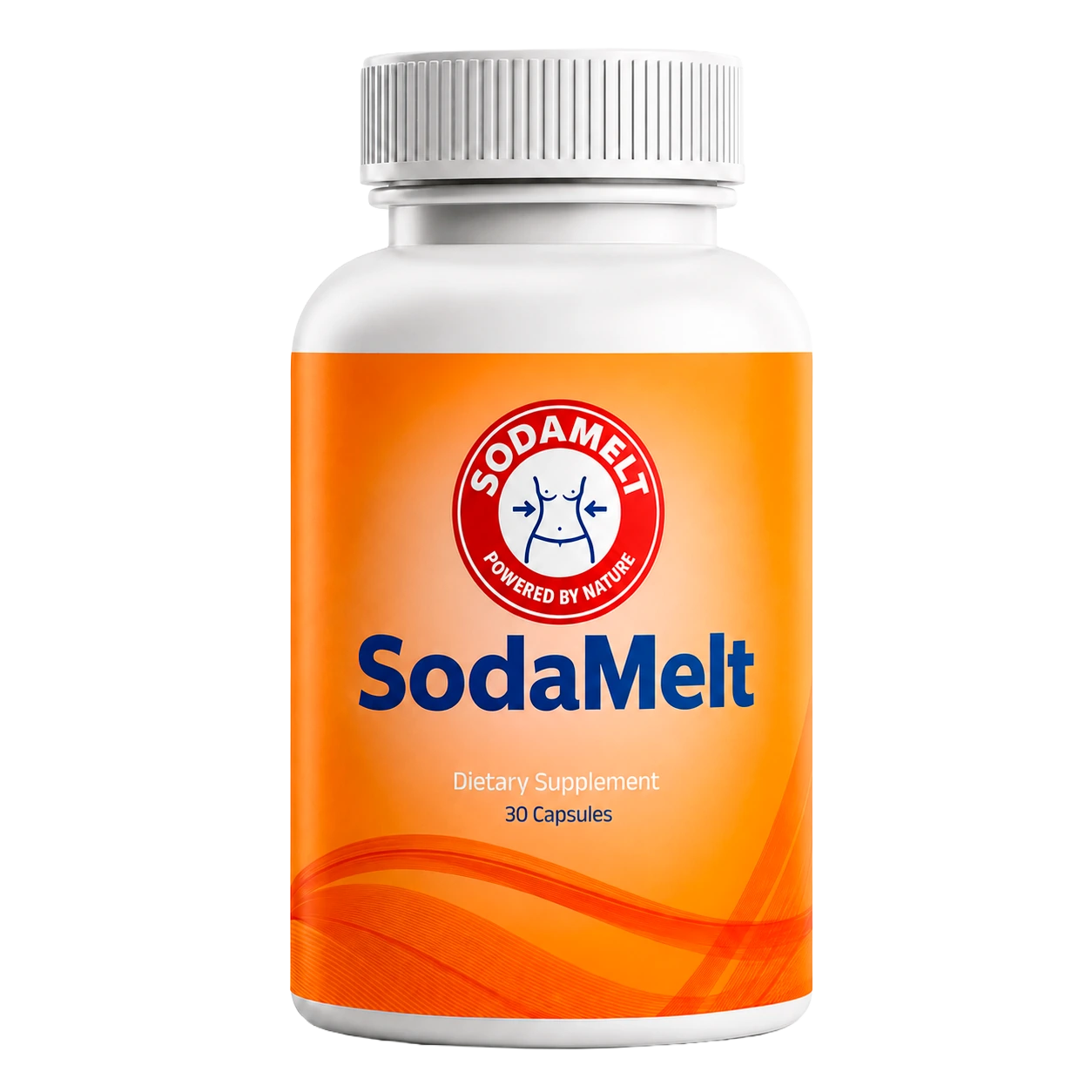
Read the whole SodaMelt panel before the probiotic row
Twelve entries, one printed amount, and the trial dose set beside every one of them on this website. One capsule a day, 30 to a bottle, 60 days from purchase to change your mind.
One bottle $89 · six bottles $294 · 60-day money-back guarantee
Order SodaMelt On The Official WebsiteOne capsule a day · 30 per bottle · lot SOD-26/SO-2224
What the trials printed
Martoni's trial is the clearest example of a properly specified study. It ran Lactobacillus acidophilus DDS-1 alongside Bifidobacterium lactis UABla-12 at ten billion colony-forming units a day, for six weeks, in 330 adults with irritable bowel syndrome, and reported on abdominal pain severity and symptomology.
Four things in that sentence are what make it citable: a named strain, a count, a duration and a population. A reader can take all four to a shelf and check whether a bottle matches.
Airaksinen's constipation trial did the same with L. acidophilus NCFM inside a blend at ten billion CFU, over two weeks, double blind and placebo controlled.
It is also worth noting where probiotics sit against the rest of this aisle. Rao and Brenner's review grades psyllium at moderate evidence for chronic constipation and does not hand out a comparable grade to probiotics as a class, which is a reflection of exactly the strain-specificity problem this post is about.
The second number a good label gives
Live organisms die. A count measured at the moment of manufacture and a count measured at the end of shelf life can differ substantially, and a label is free to print either.
The better labels say which. A figure guaranteed through to the expiry date is a meaningful commitment; a figure at time of manufacture is a statement about a day in a factory.
Storage affects it too. A capsule kept in a hot cupboard through a summer is not the same object as one kept cool and dry, which is one of the reasons the storage line on a bottle is worth reading rather than skipping.
- At manufacture: the highest number a label can print, and the least useful.
- At expiry: the figure a buyer actually receives, and the harder commitment to make.
- Neither stated: the most common case, and the one that makes a printed count much weaker than it looks.
There is a further complication specific to a capsule like this one. The probiotic is not alone in the blend. It shares the space with a bulking fibre, a clay with adsorptive properties and four stimulant botanicals, and none of those is a neutral neighbour for a live organism over a two-year shelf life.
That is not a criticism anybody can quantify from the outside, and it should not be presented as one. It is a reason why single-strain products and properly specified blends tend to say more about storage than a long botanical panel does, and a reason why the absence of a viability statement on a mixed panel is worth more attention than it usually gets.
What this panel supplies
Lactobacillus acidophilus is the eleventh and last name inside a 250 mg blend. Because a blend prints in descending predominance, last means it is the smallest of the eleven entries.
That is genuinely the whole of the quantitative information available. No strain code, no CFU count, no viability statement and no storage-linked guarantee.
Set that beside a trial specifying DDS-1 at ten billion CFU and the comparison cannot be made. Not unfavourably, which would at least be a finding. It simply cannot be made at all, which is why this row appears in the same terms on the ingredients page and on the panel page.
What this is not an accusation of
Three qualifications belong here, and the post would be unfair without them.
- Not unlawful. A supplement may name a probiotic species without a strain or a count. A great many do.
- Not a claim that the organism is absent. It is listed on the panel, and there is no reason to think it is not in the capsule.
- Not unique to this product. Uncounted probiotics are close to the norm in this aisle, which is exactly why a reader benefits from knowing what to look for.
What it does mean is that this row cannot carry any weight in a purchasing decision. An ingredient you cannot quantify is an ingredient you cannot compare, and a panel with eleven entries has enough of those already.
Four questions for any probiotic label
- Is there a strain code? DDS-1, NCFM, or similar. A species name alone is not one.
- Is there a CFU count? Without it there is no dose.
- Is the count at manufacture or at expiry? The second is the one that reaches you.
- Is the organism inside a proprietary blend? If so, even a printed botanical total tells you nothing about the probiotic's share.
Four questions, about thirty seconds, and they sort most of the shelf. A bottle answering all four is doing something unusual, and the seven-check scorecard on this website builds the same idea out across a whole label.
Applied to this panel, the answer to all four is the same, and it is the reason this post exists.
References
- Martoni CJ, Srivastava S, Leyer GJ. Lactobacillus acidophilus DDS-1 and Bifidobacterium lactis UABla-12 Improve Abdominal Pain Severity and Symptomology in Irritable Bowel Syndrome: Randomized Controlled Trial. Nutrients. 2020;12(2). Three hundred and thirty adults at 1 x 10^10 CFU/day for six weeks. PMID 32019158. https://pubmed.ncbi.nlm.nih.gov/32019158/
- Airaksinen K, Yeung N, Lyra A, et al. The effect of a probiotic blend on gastrointestinal symptoms in constipated patients: a double blind, randomised, placebo controlled 2-week trial. Benef Microbes. 2019;10(6):617-627. Lactobacillus acidophilus NCFM at 10^10 CFU within the blend. PMID 31131616. https://pubmed.ncbi.nlm.nih.gov/31131616/
- Xie P, Luo M, Deng X, et al. Outcome-Specific Efficacy of Different Probiotic Strains and Mixtures in Irritable Bowel Syndrome: A Systematic Review and Network Meta-Analysis. Nutrients. 2023;15(17). PMID 37686889. https://pubmed.ncbi.nlm.nih.gov/37686889/
- Probiotics: Usefulness and Safety. National Center for Complementary and Integrative Health, National Institutes of Health. Read 19 September 2026. https://www.nccih.nih.gov/health/probiotics-usefulness-and-safety
- Rao SSC, Brenner DM. Efficacy and Safety of Over-the-Counter Therapies for Chronic Constipation: An Updated Systematic Review. Am J Gastroenterol. 2021;116(6):1156-1181. Good evidence (grade A) for polyethylene glycol and senna; moderate evidence (grade B) for psyllium. PMID 33767108. https://pubmed.ncbi.nlm.nih.gov/33767108/