SodaMelt Official Website › Choosing a digestion supplement
Choosing a digestion supplementChoosing A Digestion Supplement: Seven Checks
Seven questions that can be answered from any label in about two minutes, and that between them separate a bottle worth buying from one that only looks like it.
The last section applies all seven to SodaMelt, which passes two outright, half-passes two and fails three. A checklist nobody applies to themselves is worth nothing.
A scorecard to carry to any shelf, then the uncomfortable half where it comes home.
Why a checklist beats an ingredient list
What a checklist can settle, and the thing it deliberately cannot.
The instinct in this aisle is to read the ingredient names and look for ones that sound researched. It is the wrong instinct, because almost every bottle contains at least one ingredient with a genuine literature behind it, and the name tells you nothing about whether this bottle delivers it.
What separates the bottles is disclosure. A label either tells you enough to check it against published research, or it does not. Seven questions cover almost all of it, and none of them requires knowing anything about botany.
The checks are also a disclosure test rather than an efficacy test, and keeping those two apart is the whole discipline. A label can pass all seven and still be a product that does nothing for you. What it cannot do is pass all seven and leave you unable to find out.
- Does every active carry its own amount?
- Is the plant part named?
- Does the amount reach what the research used?
- If a probiotic is named, is there a strain and a count?
- Does the label say how long to take it?
- Does the seller's page claim more than the bottle?
- Is the return window long enough to actually test it?
The seven checks, one at a time
Seven questions, each answerable off the packaging in a shop.
1. Does every active carry its own amount?
This is the single most informative line on any panel. A proprietary blend is allowed to print one total for a group of ingredients, which is lawful and common, and it means no individual figure exists to compare against anything.
A blend is not automatically a bad sign. It is a closed door, and everything behind it has to be taken on trust.
2. Is the plant part named?
Root, leaf, bark, husk, straw, seed. The part decides which research applies, because a plant's parts are chemically different from one another and are studied separately.
Oat is the clean example: the cholesterol literature belongs to beta-glucan from the grain, and a panel naming oat straw has named something else.
3. Does the amount reach what the research used?
This is where most of the aisle comes apart, and it is arithmetic rather than judgement. The fibre meta-analysis found benefit above 10 g a day. A whole capsule weighs a fraction of that.
Write the trial dose next to the label figure. If the two are orders of magnitude apart, the ingredient is present rather than dosed.
4. If a probiotic is named, is there a strain and a count?
Lactobacillus acidophilus is a species. DDS-1 and NCFM are strains within it, and they are what the trials ran. A count in colony-forming units is the dose.
A species name with no strain and no count is an ingredient name rather than a measurable quantity.
5. Does the label say how long to take it?
Most say how much and when, and almost none say for how long. On a panel carrying stimulant botanicals that omission matters, because the standing review of that class does not support indefinite use.
A label that volunteers a duration is unusual and is worth crediting.
6. Does the seller's page claim more than the bottle?
Put the sales page and the label side by side. The label is a regulated surface drafted carefully; a web page is less constrained.
Where they disagree, the bottle is the honest one, and the size of the gap tells you how the seller thinks about its customers.
7. Is the return window long enough to test it?
A month is the minimum honest test of most of this aisle, and several classes need longer. A fourteen-day window on a product that takes six weeks is a window that cannot be used for its stated purpose.
Check that a claim process is published, and that it has a phone number rather than only a form.
SodaMelt scored against all seven
The seven checks applied to the capsule this website sells, including the rows it does not pass.
| Check | Result | Why |
|---|---|---|
| 1. An amount for every active | Fail | Two rows carry amounts. The other 11 share a single 250 mg proprietary blend with no individual figures. |
| 2. The plant part is named | Pass | Straw for oat, herb for alfalfa, husk for psyllium, root for rhubarb, gentian and goldenseal, leaf for aloe, bark for cascara and buckthorn. Every botanical entry names its part. |
| 3. The amount reaches the researched dose | Fail | The whole blend is 250 mg. The psyllium trials sit at 10 g a day and the probiotic trials at ten billion CFU. No arithmetic closes that. |
| 4. Strain and count for the probiotic | Fail | Lactobacillus acidophilus is named as a species. No strain designation and no CFU count appear. |
| 5. The label says how long to take it | Half | It gives the dose, the water and the timing, which is more than most. It sets no duration, and four anthraquinone botanicals make duration the important instruction. |
| 6. The seller's page matches the bottle | Half | The bottle claims nothing at all, which is the conservative end of the scale. The sales page claims non-habit-forming and free of harsh laxatives, which the panel contradicts. |
| 7. A window long enough to test it | Pass | 60 days from purchase, every pack, opened bottles included, with a published claim process and a phone number behind it. |
Two passes, two half-marks and three failures. The scorecard was written first and applied afterwards.
That is a poor scoreline, and printing it on the website that sells the bottle is the only thing that makes the two passing rows worth anything. A page that scored its own product seven out of seven would have been describing a different product.
It is also worth being precise about what the failures are and are not. None of them is a safety finding. Every one of them is a disclosure finding: the label withholds figures a buyer would need to compare this capsule with the research behind its ingredients.
The three failures, in more detail
Three rows the product does not pass, taken one at a time.
Check one and check three are really the same failure twice. 11 entries share 250 mg, so no individual figure exists, and the blend total is far below the doses the research used for its two best-evidenced members. Bijkerk ran 10 g of psyllium and Martoni ran ten billion CFU. A quarter of a gram, split eleven ways, cannot hold either.
Check four is the one a buyer can do least about. A probiotic with no count is not a quantity, and there is no way to infer one. Being last in the blend means it is the smallest of the eleven, which is the only information available and is not a dose.
None of the three is unusual in this aisle. Proprietary blends are everywhere and uncounted probiotics nearly as common. That is a reason to apply the checklist to every bottle rather than a reason to excuse this one.
Five rows here and the full twelve are on the ingredients page. Reading the two columns together is the whole exercise, and it is available to anyone with the label in front of them.
The two passes, and why they are not nothing
Two rows the product does pass, and one it half-passes for a reason worth naming.
Naming the plant part is rarer than it should be. A great many labels write an ingredient name and stop, which leaves a buyer guessing at the one detail that decides whether the research applies. This panel commits on every botanical entry, and the commitment cuts against the seller in at least one place: naming oat straw rather than oat makes clear that the beta-glucan literature does not attach.
A 60-day window is long enough to be used. A bottle is thirty capsules at one a day, so the window covers a first bottle and most of a second. A buyer who starts on the day of purchase has a full month of evidence with a month of window left, which is a genuinely testable arrangement rather than a decorative one.
There is a third thing worth crediting that the checklist does not have a row for. The blend prints in descending predominance, which is a labelling requirement rather than a kindness, but it does mean the order carries information: oat straw is the largest entry and the probiotic the smallest.
Running the same seven checks on anything else
Three shapes of label the same seven questions sort quickly.
The checklist was not written for this product and works better on others. Three patterns turn up often enough to be worth naming in advance.
The transparent panel with small numbers. Every active carries its own figure and every figure is well below the researched dose. That passes check one and fails check three, and it is more honest than a blend because the failure is visible.
The single-ingredient bottle at a real dose. Bulk psyllium husk passes checks one, two and three without effort and has no probiotic row to fail. It also tastes of very little and is unpleasant to drink, which is the reason it loses to capsules in practice.
The blend with a celebrity ingredient. One well-known name at the top of a long list, a total for the group, and a sales page built around the one name. Check one and check six between them cover it.
Whatever the bottle, write the trial dose beside the label figure before anything else. That single habit settles more purchases in this aisle than any amount of reading about mechanisms, and the companion guide sets out the doses the research actually used for each class.
Five questions these checks were never built to answer
What seven yes-or-no questions cannot settle, however carefully they are answered.
- Whether the product works for you. The checklist tests disclosure, not effect, and a label can pass all seven and do nothing.
- Whether the ingredients are of good quality. No label says, and no seal on a pack answers it either.
- Whether a blend's proportions are sensible. That is the manufacturer's business and stays there.
- Whether you should be taking anything at all. A symptom that is new or persistent belongs with someone who can examine you rather than with a shelf.
- Whether the price is fair. Cost per day is a separate calculation and a simpler one.
The checklist is a disclosure test rather than an efficacy test, and keeping the two apart is the whole discipline. The MedlinePlus herb index covers what is known about individual plants, Rao and Brenner covers what the over-the-counter options are graded at, and the companion guide covers what the evidence supports class by class.
Sources behind these seven checks
The records that set the doses and the grades the checks are measured against.
- Rao SSC, Brenner DM. Efficacy and Safety of Over-the-Counter Therapies for Chronic Constipation: An Updated Systematic Review. Am J Gastroenterol. 2021;116(6):1156-1181. Good evidence (grade A) for polyethylene glycol and senna; moderate evidence (grade B) for psyllium. PMID 33767108. https://pubmed.ncbi.nlm.nih.gov/33767108/
- van der Schoot A, Drysdale C, Whelan K, et al. The Effect of Fiber Supplementation on Chronic Constipation in Adults: An Updated Systematic Review and Meta-Analysis of Randomized Controlled Trials. Am J Clin Nutr. 2022;116(4):953-969. Benefit appeared only at doses above 10 g/d. PMID 35816465. https://pubmed.ncbi.nlm.nih.gov/35816465/
- Bijkerk CJ, de Wit NJ, Muris JW, et al. Soluble or insoluble fibre in irritable bowel syndrome in primary care? Randomised placebo controlled trial. BMJ. 2009;339:b3154. Twelve weeks of 10 g psyllium, 10 g bran or 10 g placebo. PMID 19713235. https://pubmed.ncbi.nlm.nih.gov/19713235/
- Martoni CJ, Srivastava S, Leyer GJ. Lactobacillus acidophilus DDS-1 and Bifidobacterium lactis UABla-12 Improve Abdominal Pain Severity and Symptomology in Irritable Bowel Syndrome: Randomized Controlled Trial. Nutrients. 2020;12(2). Three hundred and thirty adults at 1 x 10^10 CFU/day for six weeks. PMID 32019158. https://pubmed.ncbi.nlm.nih.gov/32019158/
- Xie P, Luo M, Deng X, et al. Outcome-Specific Efficacy of Different Probiotic Strains and Mixtures in Irritable Bowel Syndrome: A Systematic Review and Network Meta-Analysis. Nutrients. 2023;15(17). PMID 37686889. https://pubmed.ncbi.nlm.nih.gov/37686889/
- van Gorkom BA, de Vries EG, Karrenbeld A, Kleibeuker JH. Review article: anthranoid laxatives and their potential carcinogenic effects. Aliment Pharmacol Ther. 1999;13(4):443-52. Short-term use is generally safe; long-term use cannot be recommended. PMID 10215727. https://pubmed.ncbi.nlm.nih.gov/10215727/
- Status of Certain Additional Over-the-Counter Drug Category II and III Active Ingredients. Final rule. Food and Drug Administration, HHS. 67 FR 31125, 9 May 2002; effective 5 November 2002. Aloe and cascara sagrada as OTC stimulant laxative ingredients are not generally recognized as safe and effective or are misbranded. https://www.federalregister.gov/documents/2002/05/09/02-11510/status-of-certain-additional-over-the-counter-drug-category-ii-and-iii-active-ingredients
- Whitehead A, Beck EJ, Tosh S, et al. Cholesterol-lowering effects of oat beta-glucan: a meta-analysis of randomized controlled trials. Am J Clin Nutr. 2014;100(6):1413-21. Twenty-eight RCTs at 3.0-12.4 g beta-glucan per day. PMID 25411276. https://pubmed.ncbi.nlm.nih.gov/25411276/
- Olennikov DN, Kashchenko NI, Chirikova NK, Tankhaeva LM. Iridoids and Flavonoids of Four Siberian Gentians: Chemical Profile and Gastric Stimulatory Effect. Molecules. 2015;20(10):19172-88. The four species studied were G. algida, G. decumbens, G. macrophylla and G. triflora, not G. scabra. PMID 26506331. https://pubmed.ncbi.nlm.nih.gov/26506331/
- Wang M, Hearon SE, Phillips TD. A high capacity bentonite clay for the sorption of aflatoxins. Food Addit Contam Part A Chem Anal Control Expo Risk Assess. 2020;37(2):332-341. A sorption study on aflatoxins, not a trial of ingested bentonite for digestive symptoms. PMID 31790632. https://pubmed.ncbi.nlm.nih.gov/31790632/
- Herbs and Supplements. MedlinePlus, U.S. National Library of Medicine. Read 19 September 2026. https://medlineplus.gov/druginfo/herb_All.html
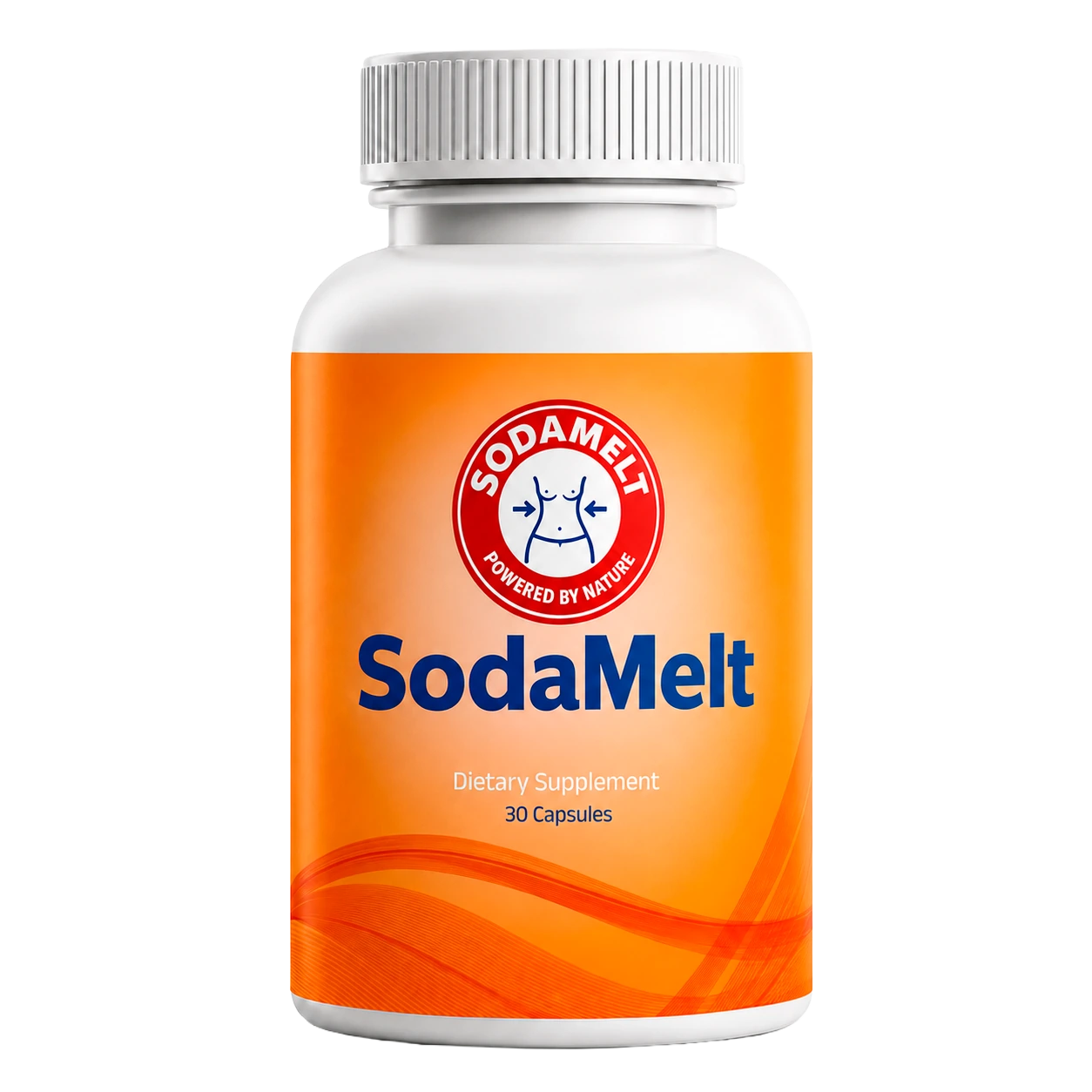
Order SodaMelt with the scorecard in front of you
Two passes, two half-marks and three failures, every one of them checkable against the printed panel. Packs run $49 to $89 a bottle with 60 days from purchase to change your mind.
One bottle $89 · six bottles $294 · 60-day money-back guarantee
Order SodaMelt On The Official WebsiteOne capsule a day · 30 per bottle · lot SOD-26/SO-2224