SodaMelt Official Website › Side effects
Side effectsDoes SodaMelt Have Side Effects?
The side effects worth knowing about in SodaMelt come from four of its eleven blend entries.
Chinese rhubarb, aloe leaf, cascara sagrada and buckthorn are stimulant laxative botanicals, so cramping and urgency are dose-related. Goldenseal is a separate question: it changes how the liver clears many medicines.
Named mechanisms rather than a general caution, because this panel gives enough information to be specific.
Does SodaMelt have side effects?
Yes, and the ones worth knowing about come from a single family of ingredients rather than from the capsule as a whole.
Four of the eleven blend entries are anthraquinone botanicals: Chinese rhubarb root, aloe vera leaf, cascara sagrada bark and buckthorn bark. That class has a well-known and well-documented effect profile, and it is the reason this page runs long.
A fifth entry, goldenseal root, is the interaction rather than the side effect. Two more, psyllium and bentonite, have handling considerations rather than adverse effects. Everything else on the panel is uneventful.
| What people report | Which entry it comes from | What usually helps |
|---|---|---|
| Cramping, urgency, loose stools | The four anthraquinone botanicals | A shorter run, or stopping. The class acts six to twelve hours after a dose. |
| Bloating or a full feeling in the first days | Psyllium husk, and the blend generally | The full 8 oz glass of water the label asks for, and time. |
| Nothing at all in the first week | The bulking and probiotic routes | These are measured in weeks in their own trials rather than in days. |
| A medicine feeling stronger than usual | Goldenseal root | A conversation with whoever prescribes it, before the next capsule. |
The left-hand column collects what buyers describe to the distributor. The middle column attributes it to the panel entry whose known mechanism fits.
The anthraquinone question in SodaMelt, in full
Four of the eleven entries in this blend belong to one chemical family, and what that family does is the largest single thing to understand about the capsule. It gets a section here rather than a footnote.
Anthraquinone glycosides pass the small intestine intact, are cleaved by colonic bacteria, and the freed compound stimulates the colonic wall. Motility rises, water reabsorption falls, and a bowel movement follows six to twelve hours later. That is a stimulant laxative mechanism and it is the same one a pharmacy senna tablet uses.
van Gorkom's review of anthranoid laxatives is the standard reference on where the class stands. Its conclusion is about duration: long-term use cannot be recommended. Nascimbeni's risk assessment is the study most often cited alongside it, measuring anthranoid laxative use at 32.7 per cent among patients with sigmoid cancer against 8.3 per cent among controls. That is an observational association in a case-control design, which is a reason for caution about duration rather than a demonstration that the laxatives caused the cancers.
The visible consequence of long use has its own name, melanosis coli, a brown discoloration of the colonic lining that shows up at colonoscopy and reverses after the laxative stops. It is not itself harmful. It is evidence of how long someone has been taking something.
- The class works. The question attached to it is duration rather than effectiveness.
- Six to twelve hours is the usual window, which is why an evening capsule acts in the morning.
- A bottle is thirty days and the guarantee runs 60. A defined run fits inside both.
- Cramping and urgency are the class's own dose-related effects and are the signal to stop rather than to double.
Two SodaMelt ingredients and the 2002 FDA laxative rule
Aloe and cascara sagrada are not arbitrary examples of the class. They are the two ingredients named in a specific federal action, and the detail is worth having exactly right.
The final rule, 67 FR 31125, was published on 9 May 2002 and took effect on 5 November 2002. The agency had moved aloe and cascara sagrada into category III and asked for mutagenicity, genotoxicity and carcinogenicity data. The data did not arrive. The rule concludes that both are not generally recognised as safe and effective, or are misbranded, as over-the-counter drug ingredients.
Here is what that does and does not mean. It governs over-the-counter DRUGS. A dietary supplement is regulated under a different statute, and that is the route this capsule takes, so the rule does not prohibit either ingredient here. What it does establish is that a regulator looked at these two specific plants, asked for safety data, and did not get it.
Both readings are true at once. Treating the rule as a ban on this product would be wrong; treating it as irrelevant would be worse. It is a piece of regulatory history attached to two of the eleven names on this panel, and a buyer is entitled to know it is there.
Not alarm, and not reassurance. The same two plants remain legal and widely sold in supplements, and the same two plants have an unanswered data request behind them from 2002. Both facts belong on the same page, which is why they are on this one.
Liver reports connected to a SodaMelt ingredient
Cascara sagrada is the entry with case reports attached, and the honest way to present a case report is as a case report.
Nadir's published case describes intrahepatic cholestasis with portal hypertension in a patient who had taken a cascara product, and the paper reviews herbal hepatotoxicity around it. The LiverTox entry for cascara keeps the record current and is the place to read the whole file rather than a single case.
Aloe has its own toxicity literature. Guo and Mei's review collects the adverse clinical effects reported for aloe vera preparations, and the NCCIH page is the plain-language version of the same material.
What a case report establishes is that something happened once and was written down. It does not establish a rate, and nobody should read one as a probability. What it does do is tell you which organ to think about, and for cascara the answer is the liver. Yellowing of the skin or eyes, dark urine, or pain under the right ribs are reasons to stop and be seen, whatever the cause turns out to be.
The lactation records sit alongside these. LactMed for aloe, for rhubarb and for buckthorn all advise against use while breastfeeding, and all three give the same reason: the cathartic activity of the anthraquinones.
The SodaMelt ingredient that changes how medicines are cleared
Goldenseal is a different kind of risk from the four stimulant entries. It is not something you feel. It is something that changes what another tablet does.
Gurley's in vivo probe study gave healthy volunteers goldenseal and measured cytochrome P450 activity directly. CYP3A4 and CYP2D6 both fell substantially, while other botanicals tested alongside did not move them. A second clinical assessment confirmed the CYP2D6 result. The digoxin study used 3,210 mg a day of standardised extract, which is the figure that makes the exposure concrete.
Those two enzymes between them handle a very large share of oral medicines: many statins, several blood pressure drugs, a number of antidepressants, some anticoagulants and a long list besides. Inhibiting them means a medicine is cleared more slowly, so its level rises without anyone changing the prescription.
The critical review of goldenseal and its constituents collects the efficacy and toxicology literature, and the NCCIH page states the interaction concern in one paragraph. LactMed covers breastfeeding separately.
If you take a prescription medicine every day, say the word goldenseal to the person who prescribes it before the first capsule. That one sentence covers the whole of this section, and it is the reason this desk names the ingredient rather than printing a general caution.
Handling notes for two more SodaMelt entries
Psyllium husk, and the water
Bulk fibre without enough liquid is uncomfortable, and in the documented extreme it compacts rather than passing. The label's 8 oz glass is the preventive measure and it is part of the dose rather than a suggestion. A case report of psyllium anaphylaxis also exists, which matters to anyone who has reacted to a bulk fibre product before.
Bentonite, and everything else you swallow
The clay binds molecules to a charged mineral surface, and the sorption work measures capacity rather than selectivity. In practice that means spacing the capsule a couple of hours from other oral products, which is the conventional handling for any adsorbent.
Alfalfa, and one specific history
L-canavanine from alfalfa is linked in the review literature to lupus-like reactions and to flares in people with an existing diagnosis. The compound concentrates in seed and sprout rather than in the aerial herb this panel names, which lowers the exposure. LactMed carries the lactation position.
Calcium carbonate, and other tablets
Calcium binds several drug classes in the gut and reduces their uptake. At 100 mg of elemental calcium the exposure here is small beside a dedicated calcium supplement, and the same two-hour spacing covers it.
When to stop taking SodaMelt
A short list, and none of it is ambiguous.
- Cramping or urgency that is unpleasant rather than merely noticeable. The anthraquinone class is dose-related, and the answer is to stop rather than to persevere.
- Yellowing of the skin or eyes, dark urine, or pain under the right ribs. Stop and be seen the same week. The cascara literature is the reason this is on the list.
- Blood in the stool, or black tarry stools. That needs an examination regardless of what you have been taking.
- A reaction that looks allergic: rash, swelling, wheeze, tightness. Psyllium has a published anaphylaxis case behind it.
- A prescription medicine behaving differently, whether stronger or weaker. That is the goldenseal conversation, and it happens before the next capsule.
- Diarrhoea lasting more than a couple of days. Fluid and electrolyte loss is the real risk of a stimulant laxative used too long, and it does not need to be dramatic to matter.
Two of those are reasons to see a doctor rather than to consult a page, and this site would rather be clear about that than hedge it. The refund desk on +1 (302) 200-3480 does not need a reason, and the refund policy covers an opened bottle.
SodaMelt safety questions
Is SodaMelt safe?
Can SodaMelt cause cramping?
Can SodaMelt be taken every day indefinitely?
Does SodaMelt interact with prescription medicine?
Is SodaMelt safe while breastfeeding?
What should you do if SodaMelt causes diarrhoea?
Sources for the SodaMelt safety page
The anthraquinone class literature, the 2002 federal rule, the liver case records and the goldenseal interaction studies.
- van Gorkom BA, de Vries EG, Karrenbeld A, Kleibeuker JH. Review article: anthranoid laxatives and their potential carcinogenic effects. Aliment Pharmacol Ther. 1999;13(4):443-52. Short-term use is generally safe; long-term use cannot be recommended. PMID 10215727. https://pubmed.ncbi.nlm.nih.gov/10215727/
- Nascimbeni R, Donato F, Ghirardi M, et al. Constipation, anthranoid laxatives, melanosis coli, and colon cancer: a risk assessment using aberrant crypt foci. Cancer Epidemiol Biomarkers Prev. 2002;11(8):753-7. Anthranoid laxative use was 32.7% in sigmoid-cancer patients against 8.3% in controls. PMID 12163329. https://pubmed.ncbi.nlm.nih.gov/12163329/
- Status of Certain Additional Over-the-Counter Drug Category II and III Active Ingredients. Final rule. Food and Drug Administration, HHS. 67 FR 31125, 9 May 2002; effective 5 November 2002. Aloe and cascara sagrada as OTC stimulant laxative ingredients are not generally recognized as safe and effective or are misbranded. https://www.federalregister.gov/documents/2002/05/09/02-11510/status-of-certain-additional-over-the-counter-drug-category-ii-and-iii-active-ingredients
- Nadir A, Reddy D, Van Thiel DH. Cascara sagrada-induced intrahepatic cholestasis causing portal hypertension: case report and review of herbal hepatotoxicity. Am J Gastroenterol. 2000;95(12):3634-7. PMID 11151906. https://pubmed.ncbi.nlm.nih.gov/11151906/
- Cascara. LiverTox: Clinical and Research Information on Drug-Induced Liver Injury. Bethesda (MD): National Institute of Diabetes and Digestive and Kidney Diseases; 2012-. PMID 31643443. https://pubmed.ncbi.nlm.nih.gov/31643443/
- Guo X, Mei N. Aloe vera: A review of toxicity and adverse clinical effects. J Environ Sci Health C Environ Carcinog Ecotoxicol Rev. 2016;34(2):77-96. Aloe vera whole leaf extract is classified by IARC as a possible human carcinogen (Group 2B). PMID 26986231. https://pubmed.ncbi.nlm.nih.gov/26986231/
- Aloe. Drugs and Lactation Database (LactMed). Bethesda (MD): National Institute of Child Health and Human Development; 2006-. Updated 15 November 2024. Aloe latex contains potent anthraquinone laxatives and should not be used during breastfeeding. PMID 30000889. https://pubmed.ncbi.nlm.nih.gov/30000889/
- Aloe Vera: Usefulness and Safety. National Center for Complementary and Integrative Health, National Institutes of Health. Read 19 September 2026. https://www.nccih.nih.gov/health/aloe-vera
- Rhubarb. Drugs and Lactation Database (LactMed). Bethesda (MD): National Institute of Child Health and Human Development; 2006-. PMID 30000922. https://pubmed.ncbi.nlm.nih.gov/30000922/
- Buckthorn. Drugs and Lactation Database (LactMed). Bethesda (MD): National Institute of Child Health and Human Development; 2006-. Updated 21 June 2021. Rhamnus cathartica, Rhamnus frangula and Rhamnus purshiana contain anthraquinones with potent cathartic properties; use should be avoided while breastfeeding. PMID 30000918. https://pubmed.ncbi.nlm.nih.gov/30000918/
- Gurley BJ, Gardner SF, Hubbard MA, et al. In vivo effects of goldenseal, kava kava, black cohosh, and valerian on human cytochrome P450 1A2, 2D6, 2E1, and 3A4/5 phenotypes. Clin Pharmacol Ther. 2005;77(5):415-26. Twelve volunteers, 28 days of supplementation, midazolam and debrisoquine probes. PMID 15900287. https://pubmed.ncbi.nlm.nih.gov/15900287/
- Gurley BJ, Swain A, Hubbard MA, et al. Clinical assessment of CYP2D6-mediated herb-drug interactions in humans: effects of milk thistle, black cohosh, goldenseal, kava kava, St. John's wort, and Echinacea. Mol Nutr Food Res. 2008;52(7):755-63. CYP2D6 handles roughly 30% of all medications. PMID 18214849. https://pubmed.ncbi.nlm.nih.gov/18214849/
- Gurley BJ, Swain A, Barone GW, et al. Effect of goldenseal (Hydrastis canadensis) and kava kava (Piper methysticum) supplementation on digoxin pharmacokinetics in humans. Drug Metab Dispos. 2007;35(2):240-5. Standardised goldenseal at 3210 mg daily for 14 days. PMID 17079360. https://pubmed.ncbi.nlm.nih.gov/17079360/
- Mandal SK, Maji AK, Mishra SK, et al. Goldenseal (Hydrastis canadensis L.) and its active constituents: A critical review of their efficacy and toxicological issues. Pharmacol Res. 2020;160:105085. PMID 32683037. https://pubmed.ncbi.nlm.nih.gov/32683037/
- Goldenseal. Drugs and Lactation Database (LactMed). Bethesda (MD): National Institute of Child Health and Human Development; 2006-. Updated 15 May 2025. Berberine can displace bilirubin from serum albumin; most sources recommend avoiding neonatal exposure. PMID 30000926. https://pubmed.ncbi.nlm.nih.gov/30000926/
- Goldenseal. National Center for Complementary and Integrative Health, National Institutes of Health. Read 19 September 2026. https://www.nccih.nih.gov/health/goldenseal
- Stack PE, Thomas E. Pharmacobezoar: an evolving new entity. Dig Dis. 1995;13(6):356-64. PMID 8590522. https://pubmed.ncbi.nlm.nih.gov/8590522/
- Collado-Chagoya R, Hernandez-Romero J, Eliosa-Alvarado GA, et al. Plantago psyllium-secondary anaphylaxis. Case report. Rev Alerg Mex. 2018;65(1):103-107. PMID 29723946. https://pubmed.ncbi.nlm.nih.gov/29723946/
- Wang M, Hearon SE, Phillips TD. A high capacity bentonite clay for the sorption of aflatoxins. Food Addit Contam Part A Chem Anal Control Expo Risk Assess. 2020;37(2):332-341. A sorption study on aflatoxins, not a trial of ingested bentonite for digestive symptoms. PMID 31790632. https://pubmed.ncbi.nlm.nih.gov/31790632/
- Brown AC. Lupus erythematosus and nutrition: a review of the literature. J Ren Nutr. 2000;10(4):170-83. Covers the alfalfa L-canavanine reports. PMID 11070144. https://pubmed.ncbi.nlm.nih.gov/11070144/
- Gorski PM, Jurzysta M, Burda S, et al. Production and biological activity of saponins and canavanine in alfalfa seedlings. J Chem Ecol. 1991;17(6):1135-43. PMID 24259173. https://pubmed.ncbi.nlm.nih.gov/24259173/
- Alfalfa. Drugs and Lactation Database (LactMed). Bethesda (MD): National Institute of Child Health and Human Development; 2006-. PMID 30000890. https://pubmed.ncbi.nlm.nih.gov/30000890/
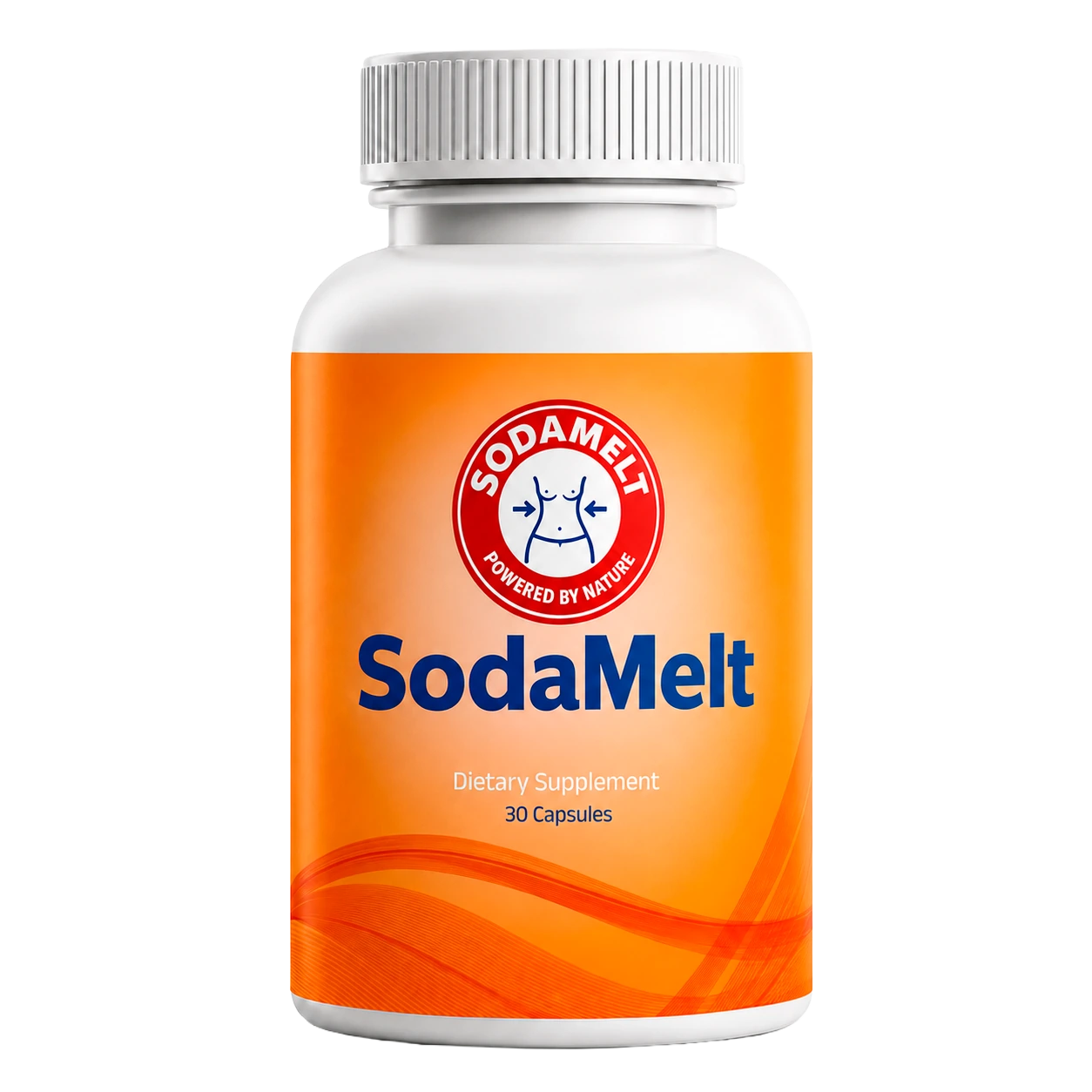
Order SodaMelt having read the safety page first
One capsule a day, four stimulant botanicals named rather than hidden, and 60 days from the date of purchase to change your mind.
One bottle $89 · six bottles $294 · 60-day money-back guarantee
Order SodaMelt On The Official WebsiteOne capsule a day · 30 per bottle · lot SOD-26/SO-2224