SodaMelt Official Website › Blog › SodaMelt Ingredients List
SodaMelt Ingredients: 12 Entries, 11 in One 250 mg Blend, 4 Stimulant Botanicals
Here is every name on the SodaMelt label, in label order, with the plant part, a plain note on each, and a clear list of what the label does not tell you.
Quick answer
SodaMelt lists 12 entries. Calcium as calcium carbonate is 100 mg. The other 11 share one 250 mg proprietary blend, printed from largest share to smallest, with no amount for any single entry. Four of the 11 are stimulant botanicals. The shell is hypromellose, and there is no baking soda.
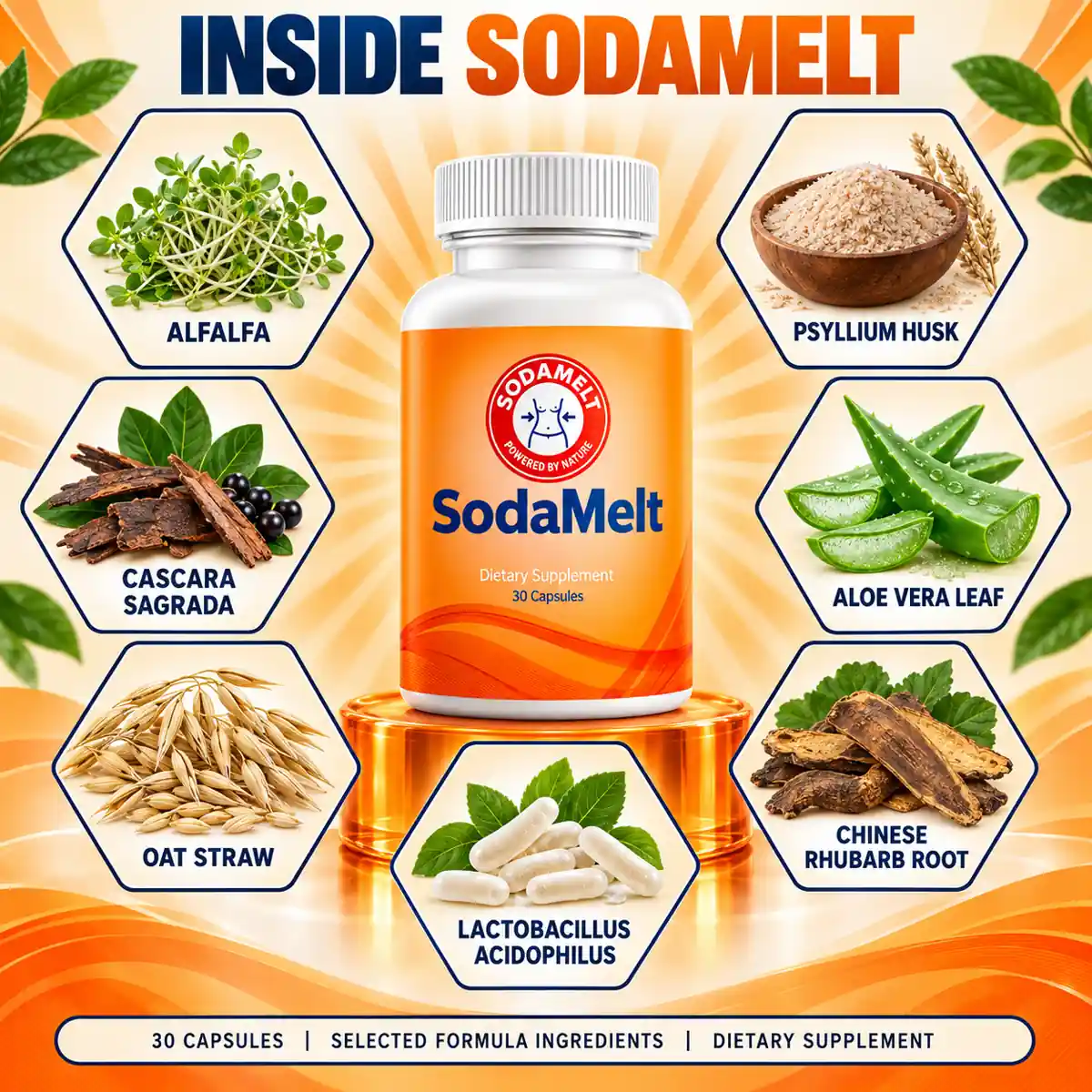
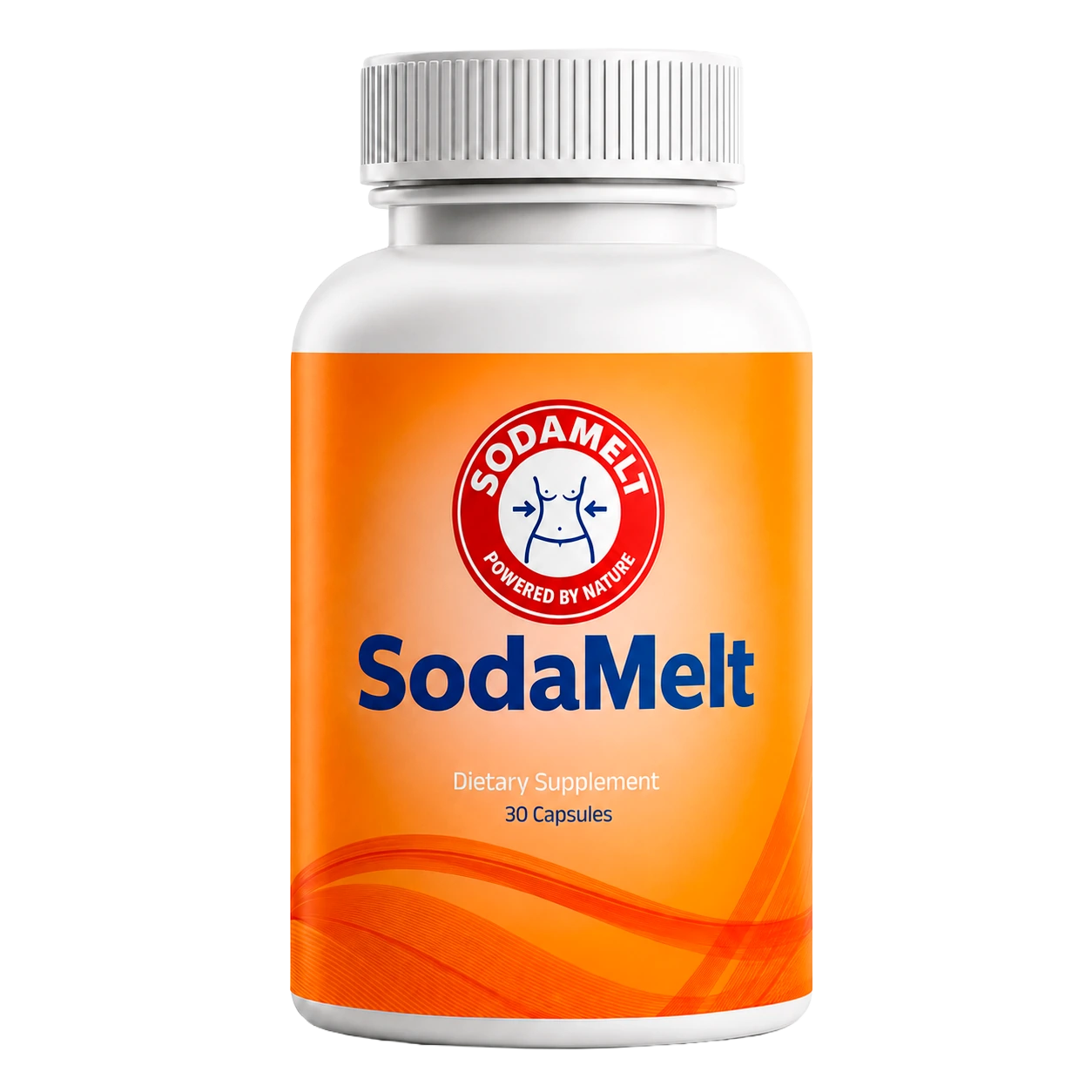
Compare the label with your own bottle
The list here is read from the printed label. If you decide to try it, the order page shows the pack, the total and the 60-day guarantee.
See today's price and guarantee
Disclosure: this desk earns a commission when an order completes through the checkout. The price is the same whether you arrive here first or go straight to the seller.
- Calcium (as calcium carbonate): 100 mg, 7.5% of the Daily Value.
- Proprietary blend: 250 mg for 11 entries. Daily Value not established. If the 11 were equal, each would average about 23 mg, but the printed order says they are not equal.
- Blend order, largest to smallest: oat straw first, Lactobacillus acidophilus last.
- Four stimulant (anthraquinone) botanicals: Chinese rhubarb root, aloe vera leaf, cascara sagrada bark and buckthorn bark.
- Other ingredients: rice flour, hypromellose (vegetable capsule), magnesium stearate (vegetable), silicon dioxide.
- No amount is published for any single botanical, and no CFU count for the probiotic.
What is in SodaMelt?
One capsule makes one serving, and a bottle holds 30 of them. The panel has two amount lines. The first is calcium. The second is the proprietary blend, which holds the other eleven.
| # | Entry | Latin name and part | Note from the label |
|---|---|---|---|
| 1 | Oat | Avena sativa, straw | First, so the largest share of the 250 mg |
| 2 | Alfalfa | Medicago sativa, herb | Second |
| 3 | Psyllium | Plantago ovata, husk | Third |
| 4 | Chinese Rhubarb | Rheum palmatum, root | Fourth. A stimulant (anthraquinone) source |
| 5 | Scabrous Gentian | Gentiana scabra Bge, root | Fifth |
| 6 | Aloe Vera | Aloe barbadensis, leaf | Sixth. A stimulant source |
| 7 | Cascara Sagrada | Rhamnus purshiana, bark | Seventh. A stimulant source |
| 8 | Goldenseal | Hydrastis canadensis, root | Eighth |
| 9 | Buckthorn | Rhamnus cathartica, bark | Ninth. A stimulant source |
| 10 | Bentonite | A clay | Tenth |
| 11 | Lactobacillus acidophilus | A probiotic strain | Last, so the smallest share |
Read from the label artwork. The seller's own numbered list is in a different order. Where they differ, the label governs.
What are the other ingredients in SodaMelt?
Four lines sit under the panel. They make the capsule, not the formula.
- Rice flour fills the capsule so the fill weight is right.
- Hypromellose is the shell. It is a plant cellulose, so the shell is not gelatin.
- Magnesium stearate (vegetable) helps powder flow through the machine.
- Silicon dioxide keeps the blend from clumping.
Does SodaMelt contain baking soda?
No. The name points that way, but the panel shows no sodium bicarbonate and none in the other-ingredients line. The only mineral is calcium carbonate. The seller's information site tells a baking-soda story, and this desk does not repeat it.
Why does the order of the blend matter?
A proprietary blend must print its entries from the largest share to the smallest, and it must print the total. This label does both. So the order is real information. Oat straw is larger than alfalfa. Alfalfa is larger than psyllium. The probiotic is the smallest.
It does not tell you the ratio. The gap between first and last could be small or large, and both would print the same way. If you split 250 mg evenly eleven ways, each share would be about 23 mg. The label says the real shares are not even. The first is bigger than 23 mg and the last is smaller.
Which SodaMelt ingredients are stimulant botanicals?
Four of the eleven carry anthraquinones. In the gut, bacteria free the active part, which raises movement in the colon and pulls water in. The usual timing is 6 to 12 hours after a dose. It is the same family of action that a pharmacy senna tablet uses.
| Entry | Part | Known for |
|---|---|---|
| Chinese rhubarb | Root | Emodin, the main anthraquinone, which has its own pharmacology review |
| Aloe vera | Leaf | Aloin, which sits in the latex under the rind |
| Cascara sagrada | Bark | Cascarosides, the classic pharmacy laxative compounds |
| Buckthorn | Bark | Frangulin and related compounds |
The right-hand column names what each plant is known for. It is not a measured amount in this capsule.
The review the site cites says short-term use of this class is generally safe, while long-term use cannot be recommended. That is why duration matters here. Read our safety guide before you start.
What does Chinese rhubarb root do in a capsule like this?
It is one of the four stimulant entries. The source names emodin as the active anthraquinone, and no human supplement trial dose was found. The breastfeeding record for rhubarb advises avoiding it while nursing, because of the same stimulant action. So the practical reading is short: it belongs to the stimulant group, its amount is unknown, and it is not for anyone who is nursing.
Is SodaMelt suitable for vegetarians?
The shell is hypromellose, a plant cellulose, not gelatin. Bentonite is a mineral clay. The other entries are botanical or microbial. No entry on the panel comes from an animal. That describes the capsule as printed. It is not a medical or religious certificate.
How do the label amounts compare with the research amounts?
The label gives one total, so a direct comparison is not possible. What can be shown is the scale. The blend is 250 mg in all. The research doses below are in grams or in billions of cells.
| Entry | On the label | In the published research |
|---|---|---|
| Psyllium husk | Inside the 250 mg blend, no amount | 10 g a day for 12 weeks in one trial. Benefit only above 10 g a day in a meta-analysis |
| Oat straw | Inside the 250 mg blend, no amount | 3.0 to 12.4 g a day of beta-glucan, from the grain, not the straw |
| Aloe vera leaf | Inside the 250 mg blend, no amount | Three short trials, 151 patients in all. The leaf latex is the laxative part |
| Goldenseal root | Inside the 250 mg blend, no amount | 3,210 mg a day of standardised extract in the human interaction studies |
| Lactobacillus acidophilus | Inside the 250 mg blend, no CFU count | 1 x 10^10 CFU a day for six weeks in one trial |
This table is not proof that the capsule fails, and not proof that it works. It shows the gap in scale.
What is not published about the SodaMelt ingredients?
- The amount of any single entry in the blend.
- A strain code and a CFU count for the probiotic.
- A laboratory report for lot SOD-26/SO-2224. This desk has not seen one.
- How long to take it. A daily dose is given, with no stop date.
- Any human digestive trial for scabrous gentian, alfalfa or bentonite. The site found none for these.
SodaMelt is a dietary supplement. It is not FDA-approved. The stated audience is adults aged 18 and over. Goldenseal can change how the liver clears many medicines, so anyone on a prescription should speak to their prescriber first.
Which sources are named for these facts?
The panel facts are read from the printed label. The research figures come from these named sources.
- The Bijkerk primary-care trial
- van der Schoot's fibre meta-analysis
- Whitehead's oat beta-glucan meta-analysis
- The aloe vera IBS meta-analysis
- Gurley's digoxin pharmacokinetics study
- The Martoni DDS-1 trial
- van Gorkom's review of anthranoid laxatives
- The emodin pharmacology review
- The LactMed record for rhubarb
Frequently asked questions
How many ingredients are in SodaMelt?
The panel names 12 entries. Calcium as calcium carbonate stands alone at 100 mg. The other 11 share one 250 mg proprietary blend with no figure for any single entry.
Which SodaMelt ingredients are laxatives?
Four entries: Chinese rhubarb (root), aloe vera (leaf), cascara sagrada (bark) and buckthorn (bark). They are anthraquinone botanicals, the stimulant laxative group.
Does SodaMelt contain baking soda?
No. The panel prints no sodium bicarbonate and none in the other ingredients. The mineral on the label is calcium carbonate.
How much psyllium is in SodaMelt?
Not published. Psyllium is third in the 250 mg blend. The trials the site cites used grams a day, and the whole blend is 250 mg.
Is the SodaMelt capsule vegetarian?
The shell is made from hypromellose, a plant cellulose, and not from gelatin. Bentonite is a clay and the other entries are botanical or microbial.
Does SodaMelt say how many CFU of probiotic it has?
No. The panel names Lactobacillus acidophilus and ranks it last in the blend. It gives no strain code and no CFU count.
Our view
The list is open about names. Every botanical comes with its Latin name and its plant part, which is more than many labels print. That is a real plus.
It is closed about amounts. One total, 250 mg, covers eleven things, and the seller does not publish the split. So you can know what is in the capsule, but not how much. Take that into account when you weigh the price and the claims.
If you are thinking about it, read the stimulant group and the goldenseal row first. They carry the real cautions. A dietary supplement is not a medicine and is not FDA-approved. Your doctor can tell you whether it suits you.
Read first, buy second
The ingredients matter more than the price. If the list suits you and your doctor agrees, the order page shows the packs and the guarantee.
See today's price and guarantee
Disclosure: this desk earns a commission when an order completes through the checkout. The price is the same whether you arrive here first or go straight to the seller.
Last updated October 29, 2026