Fibre And The Medicine Schedule: Does Psyllium Change When You Take Other Pills?
Psyllium turns to gel in water, and anything swallowed alongside it shares that neighbourhood. This article asks whether psyllium changes when you should take other pills, what the published studies on fibre and drug absorption actually found, how much psyllium a 250 mg blend can hold with it printed third of eleven, and why the label’s “as directed by your healthcare professional” line matters.
- Psyllium is a gel-forming fibre, and the fair question is whether a medicine taken alongside it is absorbed more slowly, less fully, or unchanged. The published answer is: it depends on the drug, and the evidence is thin and old.
- Two small human studies of digoxin found little or nothing: an ispaghula preparation had no influence on digoxin levels in geriatric in-patients, and bran fibre lowered absorption by 6 to 7 per cent in healthy volunteers, judged probably unimportant.
- Two 1990 letters report a possible interaction between psyllium (ispaghula) and lithium. Letters are the lowest tier of evidence.
- Because the panel prints psyllium third of eleven, it can hold at most about 83 mg of the 250 mg blend, and probably far less.
- The label’s own line, “or as directed by your healthcare professional”, is where the timing conversation belongs for anyone on a medicine with a narrow margin.
Why the question exists
Anyone who has stirred psyllium into water knows what it does: within a minute or two it turns from a loose powder into a thick gel. That property is the reason it is used at all, since the gel is what holds water in the stool. It is also the reason for the medicine-cabinet question. A drug that is swallowed into the same stomach and small intestine could, in principle, be slowed on its way to the wall of the gut, or partly held in the gel, or simply moved along at a different pace.
“In principle” is doing real work in that sentence. The most useful single source on the subject is a 2012 review in Expert Opinion on Drug Metabolism & Toxicology by Fernandez and colleagues, which gathered what had been published about drug interactions with Plantago ovata husk. Its conclusions are candid rather than dramatic. Interactions between dietary fibre and drugs have been the subject of numerous studies, but few of them were carried out with the fibre in question, and the results have often been variable. The review says psyllium husk has the potential for both benefits and risks when given with drugs, and calls for more clinical studies.
That is worth taking at face value. It does not say there is a problem, and it does not say there is not. It says the map has large blank areas. This article walks through the parts of the map that have something on them.
What the studies found
Here is what turned up when PubMed was searched for psyllium, ispaghula and closely related fibre against absorption and interaction terms, restricted to studies that could be verified in PubMed.
| Study | Drug or nutrient | Design | What it reported |
|---|---|---|---|
| Nordström, 1987 | Digoxin | 30 geriatric in-patients, randomised; wheat bran or an ispaghula preparation for 4 weeks | Ispaghula had no influence on digoxin levels at any time; wheat bran lowered them at 2 weeks, not 4, and they stayed in the therapeutic range |
| Johnson, 1987 | Digoxin capsules | 16 healthy volunteers; 11 g of bran fibre with breakfast for 10 days | Absorption reduced by 6 to 7 per cent, judged probably clinically unimportant |
| Heaney, 1995 | Calcium | 15 postmenopausal women; three-way crossover; psyllium, neutral cellulose or no fibre with a calcium-fortified drink | Fractional absorption 0.341 without fibre, 0.317 with psyllium, 0.354 with cellulose; psyllium against none not significant |
| Díez, 2017 | Metformin | Diabetic rabbits, six groups of six | Fibre in the diet raised oral bioavailability by about 34 per cent; given at the same moment it delayed absorption |
Only the first row is psyllium in people taking a prescribed drug. The others are close relatives of the question and each has a caveat.
Take the digoxin work first, because it is the tidiest. Digoxin is a heart medicine with a narrow gap between a useful blood level and a harmful one, which is exactly why interaction studies exist for it. In the Nordström trial, 30 geriatric in-patients were randomised to digoxin with either a gel-forming wheat bran or an ispaghula cathartic, and steady-state digoxin levels were tracked for four weeks. The bran lowered levels at two weeks but not at four, and they never left the therapeutic range. Ispaghula had no influence at any time. The authors concluded that neither had a clinically relevant effect in these patients.
That is a negative result for an ispaghula formulation (ispaghula is another name for psyllium husk), and it deserves the same weight as a positive one. One caution: the trial’s own abstract calls that formulation non-gel-forming, so it does not settle what a fully gelled dose would do. The second digoxin study, by Johnson and colleagues, used bran fibre in 16 healthy volunteers taking digoxin capsules with breakfast, and found predose serum levels fell from 0.89 to 0.84 ng/mL and the 24-hour area under the curve fell from 30.5 to 28.4 ng·hr/mL, a 6 to 7 per cent reduction, which the authors called probably clinically unimportant and smaller than that reported for tablets. Note again that this is bran, not psyllium; the two are different fibres, and it is included because it shows how small a measured fibre effect can be, even when it reaches statistical significance.
The calcium study is the one with psyllium itself. Heaney and Weaver gave 15 postmenopausal women calcium-fortified orange juice, labelled with a tracer, alongside a psyllium product supplying 3.4 g of psyllium fibre, an equal amount of cellulose, or nothing added. Absorption of the 219 mg calcium load was 34.1 per cent without fibre and 31.7 per cent with psyllium. That difference was not statistically significant. The difference between psyllium and cellulose was statistically significant (P < 0.05), because cellulose came out slightly above the no-fibre meal. The authors’ own summary was that psyllium makes little practical difference to the availability of co-ingested calcium at typical therapeutic doses.
The rabbit data are there for a different reason: as a reminder that the direction is not always the one people assume. In that metformin study, fibre already present in the diet increased the amount of drug absorbed by about a third, while fibre given at the same moment as the dose delayed absorption. It is an animal study with a different design from anything in a pharmacy, and it should not be applied to people. What it illustrates is why the review describes interactions as variable: fibre can slow, lower or even raise exposure depending on the drug and on when the two meet.
The lithium letters
Lithium is the other drug people mention in this context, and it is the one for which the evidence is weakest, in the sense of being least well documented in a form a reader can check. It is also another medicine with a small margin between too little and too much.
There are two publications in PubMed. One is a letter to the Lancet in 1990, “Interaction between lithium salts and ispaghula husk”, by Perlman. The other is a 1990 letter in the French journal Thérapie, “Probable interaction of psyllium and lithium”, by Toutoungi and colleagues. PubMed carries no abstract for either, so this article does not describe their numbers, and it would be wrong to guess at them.
What can be said fairly is what the publications are: brief letters, one indexed as a case report, reporting a possible or probable interaction. That is a signal, and signals of this kind are exactly what prompts the standing advice to separate doses. It is not a measured effect size and it is not a controlled study. Carbamazepine, another drug often named alongside these, returned no study that could be verified in a search of PubMed, so it is not in the table.
What that adds up to
Put the fragments together and the shape is plain. Of the human data on gel-forming fibres and drug absorption, the closest to psyllium reports either no effect on digoxin from an ispaghula preparation or a small effect on calcium that the authors judged practically minor. The measured effects of bran on digoxin were a few per cent. The lithium reports are letters. The animal work points in both directions. The reviewers’ verdict is that results have been variable and that more clinical studies are needed.
Two opposite mistakes are available from a picture like that. One is to conclude that psyllium interacts with everything, and the other is to conclude that the literature has cleared it. Neither follows. The right conclusion is that the effect, where it exists, looks modest for most drugs and is uncertain for a few, and that the few worth thinking about are the ones where a modest change matters. Those are the medicines with a narrow margin, of which lithium and digoxin are the standard examples: drugs where the blood level needed for benefit sits close to the level that causes trouble, so a small shift in absorption is enough to matter.
This is why the usual practical answer is to separate a fibre supplement from other medicines by some hours, and it is why that advice is cheap. It costs a little scheduling and removes a source of uncertainty. It also explains why the review’s call for more clinical studies is not a reason to ignore the question in the meantime.
Sizing psyllium inside this capsule
Everything above concerns psyllium given as itself, in amounts that fill a spoon. The capsule on this label is a different object, and the panel lets us bound how much psyllium it can hold without any guessing.
The panel prints one figure for the whole blend: 250 mg, shared by eleven entries and printed in descending order by weight. Psyllium is third. Whatever the split, the first two entries each weigh at least as much as psyllium does, so three times psyllium’s weight cannot exceed the blend total, and psyllium is at most 250 ÷ 3, about 83 mg. That is a ceiling, reached only if the top three entries were exactly equal and everything below them were nothing. Since eight more names sit underneath, including the probiotic printed last, the real figure is lower, by an unknown amount.
| Quantity | In milligrams | Compared with the ceiling |
|---|---|---|
| Most psyllium the capsule can hold, given the printed order | about 83 mg | — |
| The whole blend, all eleven entries | 250 mg | The ceiling is one third of this |
| The psyllium given in the calcium study | 3,400 mg | About 41 times the ceiling |
The ceiling is derived from the printed order. It is a bound, not an estimate of the real amount.
So the psyllium fibre used in the one psyllium absorption study that could be verified was roughly forty times the most this capsule could contain. That is useful, and it is not a licence. A ceiling tells you the exposure is small compared with a spoonful; it cannot tell you that a drug with a very narrow margin is immune to a small amount. And the amount of psyllium is not the whole question, because psyllium is not the only entry that could plausibly matter to a medicine schedule.
Goldenseal, eighth on the panel, has a measured effect on how the body handles certain drugs through liver enzymes, a mechanism unrelated to gel formation. That is set out in Goldenseal’s Enzyme Effect, and it is a better reason for a medicine conversation than the fibre is. Bentonite is a clay, and whether a clay affects absorption is a question a reader can put to a pharmacist; how much of it the capsule holds is covered in Bentonite, By Weight. The dose of psyllium needed for the effect people usually buy it for, a separate matter, is covered in Psyllium Husk And The Ten-Gram Question.
The calcium row, briefly
The panel’s other amount row is calcium, 100 mg as calcium carbonate, at 7.5 per cent of the Daily Value. The Heaney study above tested psyllium’s effect on absorbing calcium and found no statistically significant change against no fibre, so the fibre is not a reason to worry about the calcium. Why the row exists, how calcium carbonate behaves with food and how it sits in the directions are all covered on the how to use page and on the supplement facts page, and this article leaves it there.
The label line that is not boilerplate
The suggested-use line on the label reads, in full, that for best results the capsule is taken 20 to 30 minutes before a meal with 8 oz of water “or as directed by your healthcare professional”. It is easy to read the last clause as legal decoration. In this context it is doing something specific.
The first half of the line is a general schedule that fits nobody’s exact day. The second half hands the fitting to someone who can see your whole medicine list. For a person on lithium, digoxin or another medicine where timing and blood level matter, that hand-off is the interaction question. A pharmacist can look at when your other tablets are taken, whether any are to be taken on an empty stomach, whether blood levels are monitored and on what routine, and place the capsule somewhere that does not disturb any of it.
There is a quieter reason to keep the timing steady. Where a medicine’s blood level is checked periodically, the result is read against a stable routine. Starting or stopping a fibre-containing product changes the routine without changing the prescription, and the clinician reading the next result may not know why it moved. The Nordström trial tracked steady-state levels, which is the measure a clinician actually sees: a level under set conditions.
A short list for the pharmacy counter
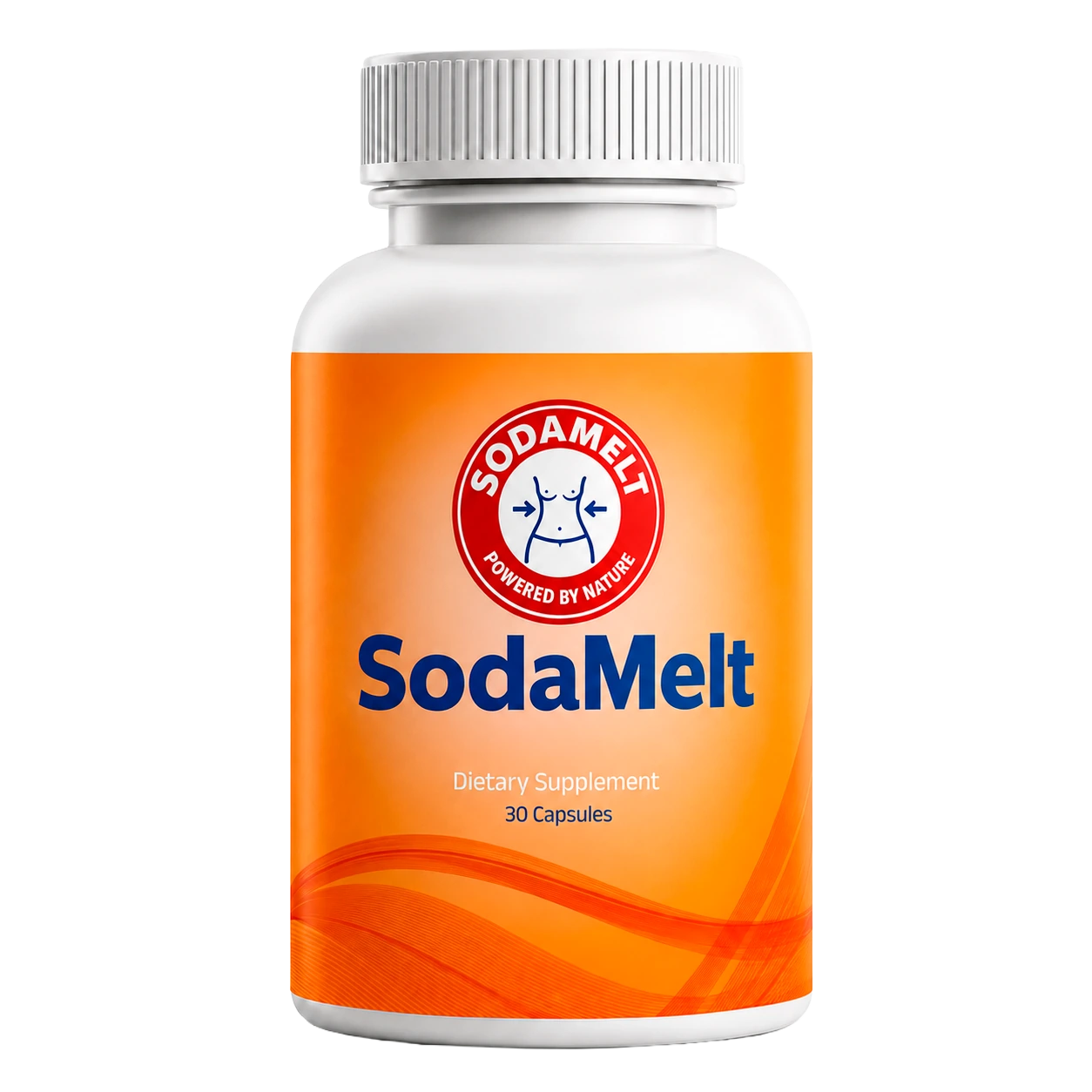
- Bring the label, not just the name. The useful fact is that a capsule contains psyllium among ten other entries, and that goldenseal is one of them.
- Ask the specific question. “Does anything I take need to be separated from this capsule, and by how long?” gets a more useful answer than “is it safe?”
- Say which medicines have a narrow margin. If you take lithium, digoxin, a seizure medicine or any drug that is monitored by blood test, lead with that.
- Keep the timing the same from day to day. A steady routine is easier to interpret than an irregular one, for you and for anyone reading your results.
- Tell the prescriber when you start or stop. Especially if a drug level is due to be checked.
None of this is a case against the capsule. It is a case for treating the timing line on the label as the practical instruction it is. The published record on fibre and drugs is patchy, mostly small and mostly old, and that is precisely the situation in which a cheap precaution beats a confident guess.
Bring the label to the pharmacist
The supplement facts page lists every entry in the order the label prints it, which is what a pharmacist needs to see.
Order SodaMeltGoldenseal’s Enzyme Effect · Potassium, Laxatives And The Medicine Cabinet · Psyllium Husk And The Ten-Gram Question.
References
- Fernandez N, Lopez C, Díez R, Garcia JJ, Diez MJ, Sahagun A, et al. Drug interactions with the dietary fiber Plantago ovata husk. Expert Opin Drug Metab Toxicol. 2012;8(11):1377-86. PMID 22920146. https://pubmed.ncbi.nlm.nih.gov/22920146/
- Nordström M, Melander A, Robertsson E, Steen B. Influence of wheat bran and of a bulk-forming ispaghula cathartic on the bioavailability of digoxin in geriatric in-patients. Drug Nutr Interact. 1987;5(2):67-9. PMID 3038494. https://pubmed.ncbi.nlm.nih.gov/3038494/
- Johnson BF, Rodin SM, Hoch K, Shekar V. The effect of dietary fiber on the bioavailability of digoxin in capsules. J Clin Pharmacol. 1987;27(7):487-90. PMID 2821081. https://pubmed.ncbi.nlm.nih.gov/2821081/
- Heaney RP, Weaver CM. Effect of psyllium on absorption of co-ingested calcium. J Am Geriatr Soc. 1995;43(3):261-3. PMID 7884114. https://pubmed.ncbi.nlm.nih.gov/7884114/
- Díez R, García JJ, Diez MJ, Sierra M, Sahagun AM, Fernández N. Influence of Plantago ovata husk (dietary fiber) on the bioavailability and other pharmacokinetic parameters of metformin in diabetic rabbits. BMC Complement Altern Med. 2017;17(1):298. PMID 28592281. https://pubmed.ncbi.nlm.nih.gov/28592281/
- Perlman BB. Interaction between lithium salts and ispaghula husk. Lancet. 1990;335(8686):416. PMID 1968148. https://pubmed.ncbi.nlm.nih.gov/1968148/
- Toutoungi M, Schulz P, Widmer J, Tissot R. [Probable interaction of psyllium and lithium]. Therapie. 1990;45(4):358-60. PMID 2399524. https://pubmed.ncbi.nlm.nih.gov/2399524/