SodaMelt Official Website › Blog › Bentonite, By Weight
Bentonite, By Weight: The Math A Detox Claim Has To Clear
Bentonite is tenth of eleven names inside this panel's 250 mg blend, a clay sitting among ten plants. Clay is sold on a binding claim, and binding claims live or die on quantity: how much material, against how much of what it is supposed to bind. Put this product's own weight order against that arithmetic and the picture narrows fast.
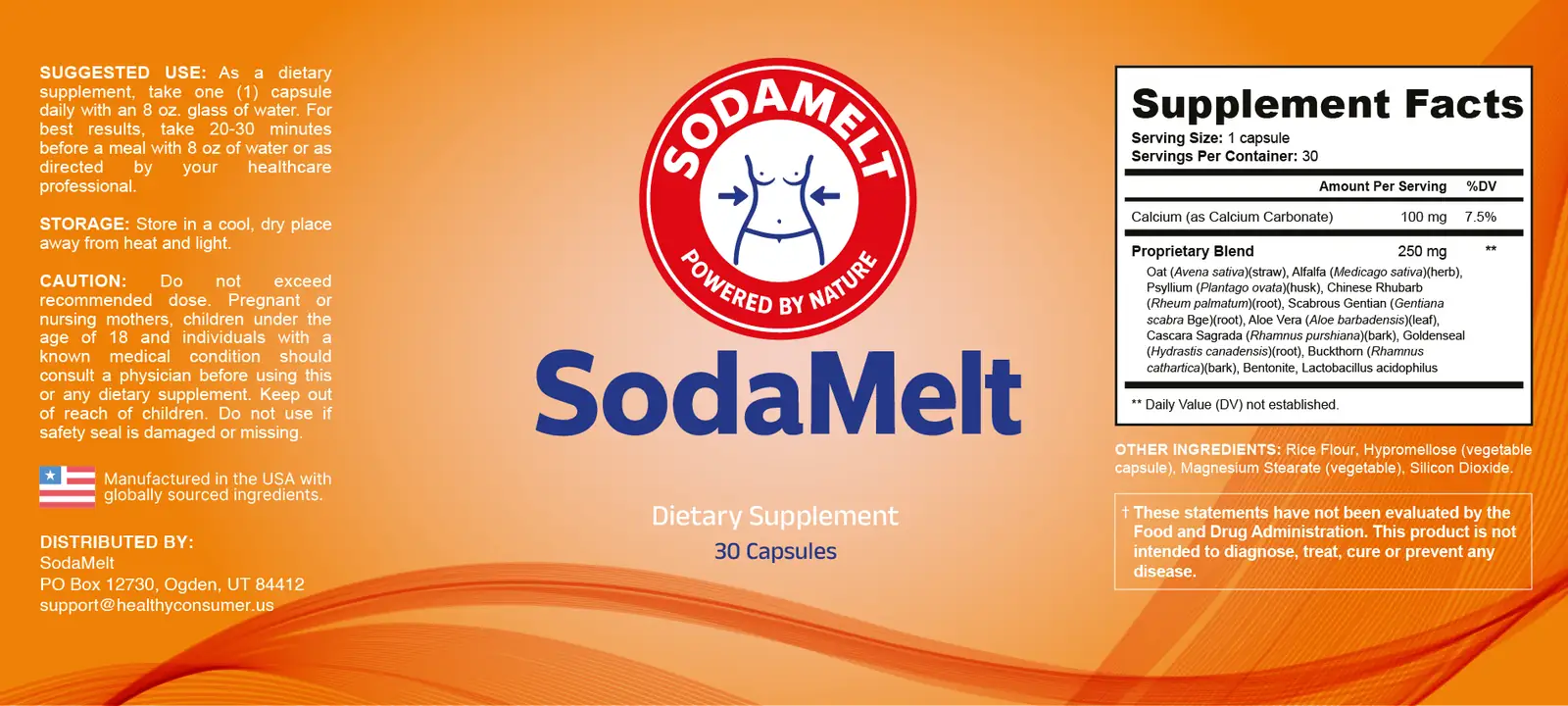
- Bentonite is a mined clay, not a botanical, and the tenth of eleven names by weight inside this blend.
- Clay's binding claim is real chemistry: a charged mineral surface adsorbing other molecules in water. It is not, by itself, evidence of what a few milligrams do inside a person.
- The same clays studied for human ingestion in the published literature carry a documented, geology-driven lead and cadmium contamination risk — the same surface chemistry, working in both directions.
- At position ten of eleven, this capsule's clay content is necessarily a small fraction of an already small 250 mg total, which caps both the plausible benefit and the realistic exposure.
- No test result for lead, cadmium, arsenic or mercury is printed on this label for any ingredient.
The weight order, worked through for this row
Under 21 CFR 101.36, a proprietary blend lists its ingredients in descending order of weight. On this label that order is oat straw, alfalfa herb, psyllium husk, Chinese rhubarb root, scabrous gentian root, aloe vera leaf, cascara sagrada bark, goldenseal root, buckthorn bark, bentonite, Lactobacillus acidophilus — eleven names, one figure, 250 mg.
| Position | Name | What the order alone implies |
|---|---|---|
| 1–3 | Oat straw, alfalfa, psyllium | Likely the largest three by weight; the split itself is not printed |
| 4, 6–7, 9 | Chinese rhubarb, aloe vera, cascara sagrada, buckthorn | The four anthranoid botanicals covered on this site's other post |
| 5, 8 | Scabrous gentian, goldenseal | Middle of the printed order |
| 10 | Bentonite | Second from the bottom of eleven; a small share of a small total |
| 11 | Lactobacillus acidophilus | Last by weight, and dosed in a unit (CFU) this label never uses |
The order is a legal requirement (21 CFR 101.36); the split behind it is not disclosed, so this is what the position implies, not a measured amount, an arithmetic this site's post on what a proprietary blend hides works through in full.
Even splitting 250 mg evenly across eleven names, the average is 22.7 mg. A blend loading weight toward the four anthranoid rows — the mechanism this site's companion post documents as the one with actual clinical literature behind it — would leave bentonite at position ten with less than that average, plausibly a few milligrams. That is the number a binding claim has to work with.
What a binding claim actually requires
Clay is marketed for gut health on the idea that it binds or adsorbs unwanted material. That property is genuine chemistry: montmorillonite clay carries a negative surface charge and a large surface area for its size, which lets it adsorb positively charged ions and some organic molecules when suspended in water. It is a real, measurable property in a beaker.
What determines whether that property does anything meaningful inside a person is quantity: how much clay, in contact with how much material, for how long. A binding claim scales with milligrams the same way a fibre claim or a mineral claim does. This label does not print a milligram figure for bentonite at all, only its position inside a 250 mg total shared eleven ways, so the quantity side of the binding-claim equation is simply unavailable from the panel.
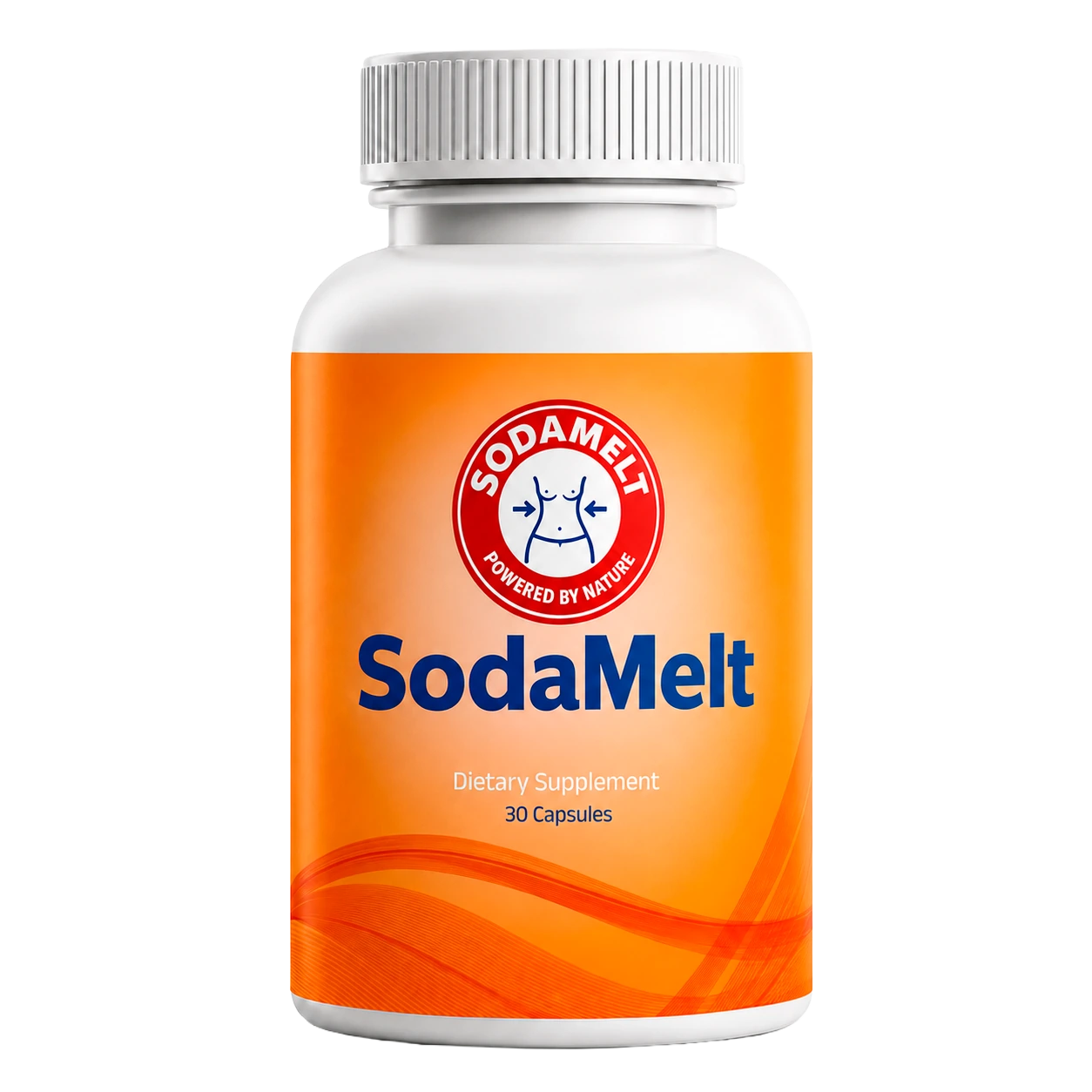
See the SodaMelt panel exactly as printed
Two rows, eleven names inside one of them, including the one row that is a mineral rather than a plant.
One bottle $89 · six bottles $294 · 60-day money-back guarantee
Order SodaMelt On The Official WebsiteOne capsule a day · 30 per bottle · lot SOD-26/SO-2224
Why position ten sets a ceiling on both sides
The same small quantity that limits how much binding a buyer could reasonably expect also limits how much of any contaminant a worst-case sourcing scenario could deliver in one capsule. That is worth stating plainly, because a small amount of a risky material is a different question from a large amount of the same material, and this label's own weight order is the evidence that the amount here is small in absolute terms.
It does not, however, make the sourcing question irrelevant. A trace amount of an uncontaminated clay and a trace amount of a contaminated one are not the same thing for a product taken daily over months, and nothing on this label distinguishes between them. Heavy metals like lead and cadmium are cumulative in the body rather than cleared quickly, so a small daily exposure sustained across a long period of use is a different calculation than a single small dose, even though the milligram amount per capsule stays the same either way.
The documented risk behind the same chemistry
The property that makes clay marketable for binding is the same property that makes ingested clay a documented contamination risk: it adsorbs whatever charged material was present when it formed, which for a mined clay includes any lead or cadmium in the source deposit. A 2020 analysis of clays sold for consumption in open markets in southern Nigeria measured lead above the WHO/FAO permissible limit in all twenty samples tested, sixteen percent also over the cadmium limit, describing these products as “implicitly or explicitly marketed as dietary supplements” (Orisakwe et al., 2020). A clinical review of severe gestational lead poisoning found that most of fifteen women identified with dangerously elevated blood lead had developed it from eating soil, clay or pottery (Shannon, 2003).
Neither study tested an encapsulated, food-grade bentonite of the kind used in US supplement manufacturing, and both describe raw geophagic clay eaten in much larger quantities than a trace ingredient inside a capsule. The contamination they document tracks the specific deposit, not the word “bentonite.” What transfers directly is the mechanism: a mineral binds whatever was already in its source ground, for better or worse, and this label prints no test result settling which applies here.
A word that covers more than one material
“Bentonite” is not a single, uniform substance. The category splits into sodium bentonite, which swells substantially when it meets water and carries the strongest “drawing” or “detox” marketing claims, and calcium bentonite, which swells less and is more commonly the variety sold as a food-grade ingredient for internal use. Both share the underlying mineral, montmorillonite, but differ in which exchangeable cation dominates the clay's surface, which changes its behavior in water and plausibly its behavior in a digestive tract.
This label prints one word, with neither variety specified. A reader who has encountered sodium bentonite drink-powder marketing, the more visible category online, may be attaching claims to this capsule that were made for a different material entirely. Whether that matters here depends on which variety is actually inside this bottle, a fact the panel does not supply.
What this is not an accusation of
Three qualifications belong here, matching the standard this site holds every ingredient row to.
- Not a claim of contamination. No data exists, in either direction, for this specific product's bentonite.
- Not unlawful. Printing an ingredient name without a per-item weight or a certificate of analysis is standard, permitted practice for a proprietary blend.
- Not unique to clay. The same testing gap applies to every name in this blend; clay is simply the one ingredient whose category carries a specifically documented, geology-linked risk in the published literature.
- Not a reason to assume the small amount is safe by definition. A small quantity lowers the stakes; it does not answer the sourcing question, which is a separate matter from quantity entirely.
Holding all four at once is the honest position this row supports. A trace amount of clay, with a genuine and specific traditional rationale, sitting inside a supplement panel that discloses names but not weights, mined from a source this label does not identify, using a chemistry that cuts toward both a claimed benefit and a documented risk category depending on which direction you look. None of that collapses into either a clean endorsement or a clean warning, and a page that forced it into one or the other would be less accurate than this one, not more useful.
Four questions for any clay ingredient
- Which variety? Sodium and calcium bentonite behave differently in water; the label names neither.
- What is the milligram amount? Position inside a blend is not a quantity.
- Is there a heavy-metal certificate of analysis? On the finished batch, not just the raw material, and against a named limit such as USP <2232>.
- Where was it mined? The published contamination data tracks specific deposits, so origin is the variable that would actually answer the risk question.
This label answers none of the four. That puts bentonite in the same position as most of this panel: named, positioned, and otherwise unquantified. None of the four questions is exotic; each one is the kind of detail a support desk should be able to answer within a day if the sourcing and testing behind it actually exist, and a bottle that answers all four well would be doing something genuinely unusual for this category of ingredient.
What US supplement rules do and don't require here
Dietary supplements in the United States are regulated under DSHEA as a category of food, not as drugs. Current Good Manufacturing Practice rules for supplements, 21 CFR Part 111, require a manufacturer to verify the identity of each incoming ingredient and to hold the finished product to specifications it sets for itself. They do not require a specific heavy-metal assay to be run on every batch, and they do not require the result of any testing that is done to be published for buyers.
That is a statement about what a buyer is guaranteed to see, not a statement about what any particular manufacturer actually does internally, which this website has no way to observe. For a mined mineral like bentonite, where the published literature ties contamination risk to the specific deposit rather than to processing quality, that gap between what the rules require and what a label actually discloses is the whole reason this row is worth a second look rather than a first-glance dismissal.
References
- Orisakwe OE, Udowelle NA, Azuonwu O, Nkeiruka IZ, Nkereuwem UA, Frazzoli C. Cadmium and lead in geophagic clay consumed in Southern Nigeria: health risk from such traditional nutraceutical. Environ Geochem Health. 2020;42(11):3865-3875. PMID 32607698. https://pubmed.ncbi.nlm.nih.gov/32607698/
- Shannon M. Severe lead poisoning in pregnancy. Ambul Pediatr. 2003;3(1):37-9. PMID 12540252. https://pubmed.ncbi.nlm.nih.gov/12540252/
- U.S. Food and Drug Administration. Dietary Supplement Current Good Manufacturing Practices, 21 CFR Part 111. https://www.fda.gov/food/dietary-supplements-guidance-documents-regulatory-information/current-good-manufacturing-practices-cgmps-dietary-supplements