What The LiverTox Summaries Say About The Plants On This Panel
A safety database is worth reading row by row, provided you remember what it counts. LiverTox, the NIH reference site on drug-induced liver injury, has entries for some of the plants on this panel and none under the names of others, and its summaries are more measured than either a scare headline or a reassurance. This article walks the blend in printed order and reports what each summary says, what the case reports behind it look like, and where the evidence is thin.
- LiverTox, the NIH reference site on drug-induced liver injury, has entries under their own names for two plants on this panel, aloe vera and cascara, and covers goldenseal only inside its berberine entry.
- The summary sentences are measured. Aloe: oral forms linked to “rare instances” of clinically apparent liver injury. Cascara: generally well tolerated, with injury at high doses for longer than recommended. Berberine: not linked to clinically apparent liver injury.
- Chinese rhubarb, buckthorn, oat, alfalfa, psyllium, scabrous gentian, bentonite and the probiotic had no LiverTox chapter under their own names in the listing searched.
- What sits behind the aloe entry is a handful of case reports, which show a signal and cannot show a rate.
- The larger problem is the multi-ingredient product: in the US network that studies supplement liver injury, the responsible component is usually unknown.
What a LiverTox category counts
Most people meet the word “hepatotoxic” in a headline, where it means nothing more precise than “bad for the liver”. The people who maintain LiverTox, a free website from the National Institutes of Health on drug-induced liver injury, have to be more careful than that, because a clinician looking at a patient with abnormal liver tests needs to know how often an agent has actually been implicated, not whether it sounds dangerous.
The most useful description of how the sorting works is a 2016 paper by Björnsson and Hoofnagle in Hepatology. They took the agents described on the site and sorted them into five categories by the number of published cases of convincingly documented, clinically apparent, idiosyncratic liver injury: category A for 50 or more, B for 12 to 49, C for 4 to 11, D for 1 to 3, and E for none. Seven agents that damage the liver only at high doses were put in a separate group.
Two features of that scheme matter for everything that follows. The first is that it counts published reports. It does not count users. A very popular product with a handful of reports and an obscure one with the same handful land in the same place, even though the first has been swallowed by millions of people and the second by a few thousand. The category is not a rate.
The second is that the paper itself is candid about the quality of what gets counted. Of 671 agents, 353 (53 per cent) were convincingly linked to liver injury in published case reports, and the other 318 (47 per cent) had no convincing report at all. The authors also note that “many published instances do not stand up to critical review”. That is the right frame for reading any entry: the raw material is case reports, and case reports vary a great deal in how well they establish that the agent, and not something else, did the damage.
A word on method, so nothing here is overstated. The PubMed listing for each LiverTox chapter carries a short summary of it, and the quoted sentences below are those summaries. Each chapter’s full text has the longer write-up and its own detailed category, and the links in the reference list go to it. If a real decision depends on an entry, that is the page to read, not a paraphrase.
The panel, mapped to the database
The panel prints eleven entries inside one 250 mg proprietary blend, in descending order by weight, beside a separate calcium row. Here is each blend entry against what turned up when the PubMed-indexed LiverTox chapters were searched for its name.
| Printed order | Entry on the panel | LiverTox chapter found | What its summary says |
|---|---|---|---|
| 1 | Oat (Avena sativa, straw) | None under this name | — |
| 2 | Alfalfa (Medicago sativa, herb) | None under this name | — |
| 3 | Psyllium (Plantago ovata, husk) | None under this name | — |
| 4 | Chinese Rhubarb (Rheum palmatum, root) | None under this name | — |
| 5 | Scabrous Gentian (Gentiana scabra Bge, root) | None under this name | — |
| 6 | Aloe Vera (Aloe barbadensis, leaf) | Aloe Vera | Oral forms linked to rare instances of clinically apparent liver injury |
| 7 | Cascara Sagrada (Rhamnus purshiana, bark) | Cascara | Generally safe and well tolerated; can cause clinically apparent liver injury at high doses for longer than recommended |
| 8 | Goldenseal (Hydrastis canadensis, root) | Berberine, which names goldenseal as a source | Berberine not linked to aminotransferase elevations or to clinically apparent liver injury |
| 9 | Buckthorn (Rhamnus cathartica, bark) | None under this name | — |
| 10 | Bentonite (clay) | None under this name | — |
| 11 | Lactobacillus acidophilus | None under this name | — |
“None under this name” describes a search of the PubMed-indexed chapters, not a claim about the whole site or its future contents.
Two general chapters are worth knowing about, because they frame the rest. LiverTox’s overview of Chinese and other Asian herbal medicines says that among more than 7,000 Chinese herbal medications only a few have been linked to clinically apparent liver injury, and the ones it names as most commonly mentioned are Ba Jiao Lian, Chi R Yun, Jin Bu Huan, Ma Huang and Shou Wu Pian. Rhubarb is not on that list. The same overview adds a caution that runs the other way: many herbal products are mixtures whose composition varies under an identical name, and some are poorly labelled.
The chapter on herbal and dietary supplements in general makes a point that is easy to skim past. Up to 40 per cent of patients attending liver clinics also use supplements, and most people who use them do not tell their primary care provider. We will come back to that, because it is the most actionable sentence in this whole article.
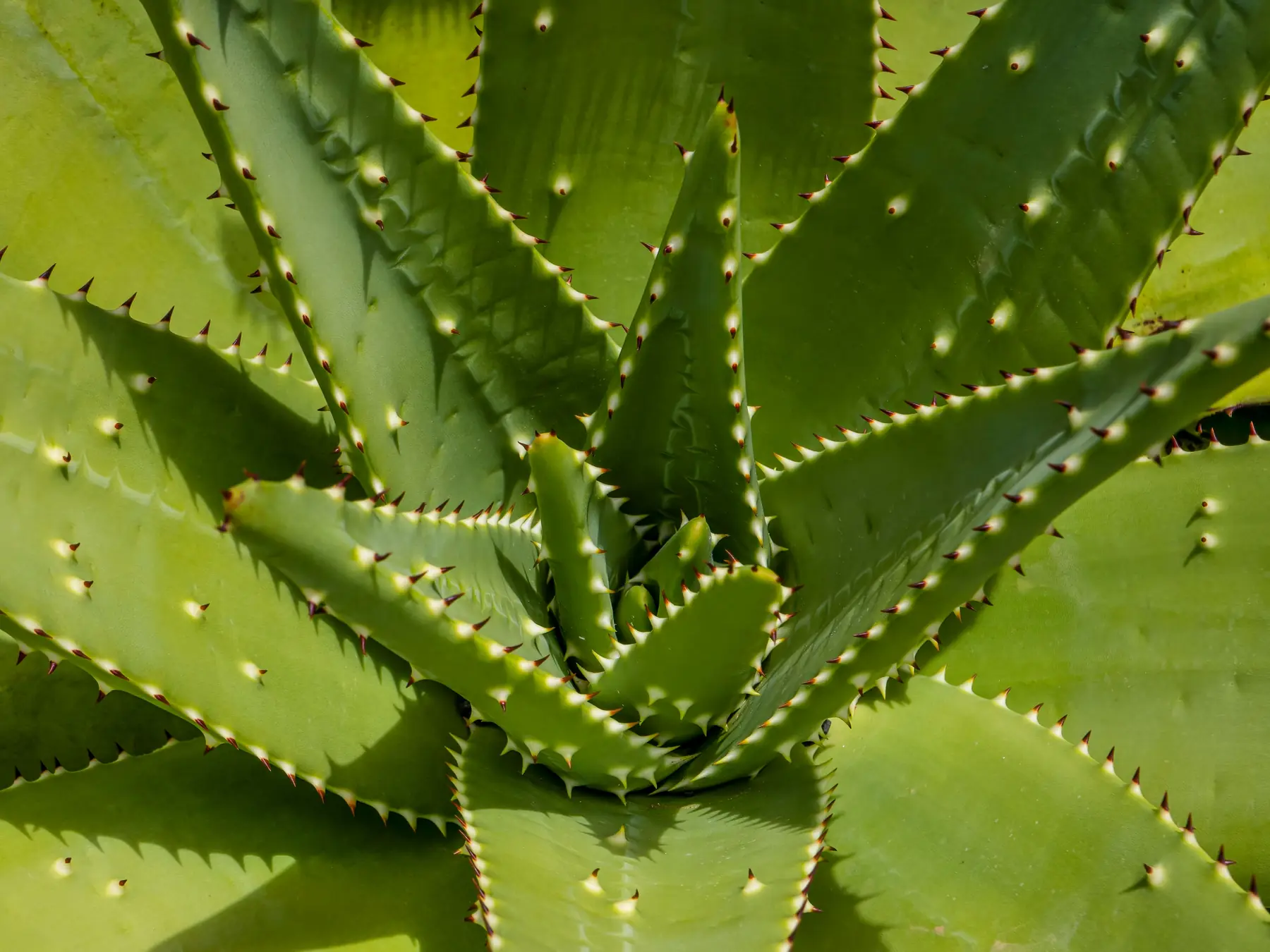
Aloe vera, sixth on the panel
The LiverTox chapter on aloe vera opens by noting that aloe is used topically for skin care and orally as a component of many herbal mixtures, and then says that oral forms have been linked to “rare instances of clinically apparent liver injury”. That is the whole summary. Rare, oral, clinically apparent.
The instances behind it are published case reports, and it is worth looking at what they are, because the pattern is the same in each. In 2005, Rabe and colleagues described a 57-year-old woman whose hepatitis was linked to Aloe barbadensis preparations and resolved completely after she stopped them; they presented it as the first such case. Bottenberg’s 2007 report is a good illustration of how careful these authors can be: a 73-year-old woman was admitted with acute hepatitis, extensive testing found no cause, and it was only after a clinical pharmacist took a detailed medication history that she mentioned oral aloe vera capsules for constipation. Her liver markers returned to normal when she stopped. On the Naranjo scale the authors rated the link “possibly” related, on the Roussel Uclaf method “probably”, and they chose to report the more conservative label.
Later reports follow the same shape. A Korean series of three women, aged 55 to 62, had taken aloe preparations for months and met diagnostic criteria on the RUCAM scale; enzymes normalised after discontinuation. A 21-year-old woman developed acute toxic hepatitis after four weeks on an aloe vera preparation, and a 68-year-old woman had acute liver injury that settled once the oral aloe was stopped.
What these reports establish, and what they do not
- They establish a temporal pattern. Injury appears while a product is being taken and improves when it is stopped. That is real evidence, and it is the main tool available in this field.
- They do not establish frequency. A few reports across roughly two decades say nothing about how many people took aloe without a problem, and the LiverTox word “rare” is a judgement about exactly that gap.
- They rarely identify the material. “An aloe vera preparation” may be a gel, a whole-leaf extract or a latex-containing product. The anthraquinone-rich part of the plant is the latex under the leaf skin, and the reports do not let a reader say which fraction was involved.
- They cannot rule out a second cause. One published report describes toxic hepatitis after interferon beta and aloe vera together, in a patient with multiple sclerosis, which is precisely the kind of case where nobody can say which agent did what.
A broader 2016 toxicity review by Guo and Mei lists other things that ingestion of aloe preparations has been associated with: diarrhoea, low potassium, pseudomelanosis coli and, in some cases, kidney failure. It also records that whole-leaf aloe extract showed clear evidence of carcinogenic activity in rats and was classified by the International Agency for Research on Cancer as a possible human carcinogen. That is a different question from the liver one, and it concerns a specific type of extract, but it explains why aloe so often turns up in safety discussions. The potassium point has its own article, Potassium, Laxatives And The Medicine Cabinet.
Cascara, seventh
Cascara has its own LiverTox chapter, and its summary is the one most shaped by dose and duration: cascara is “generally safe and well tolerated”, but can cause adverse events, including clinically apparent liver injury, “when used in high doses for longer than recommended periods”.
The published case behind that sentence, and the way the anthraquinone family as a whole connects to it, are already set out in Four Stimulant Botanicals On One Panel, and there is no reason to retell it here. The point to carry over is the structure of the sentence. The LiverTox summary does not say cascara is dangerous and it does not say cascara is harmless. It attaches the concern to two specific conditions, a high dose and a long time, and those are the two things a one-capsule-a-day product with an unstated share of cascara is not designed to test.
Goldenseal, eighth, and the berberine entry
There is no LiverTox chapter titled for goldenseal in the listing searched, but its chapter on berberine names goldenseal as one of the botanical products in which berberine is found, and that chapter’s summary is a reassuring one: berberine “has not been linked to serum aminotransferase elevations during therapy nor to instances of clinically apparent liver injury”.
Two limits apply. Berberine is one alkaloid; goldenseal root contains others, and the National Toxicology Program named berberine, hydrastine and canadine as its major alkaloids. And the liver is not the only question about goldenseal on this panel. Its effect on how the body handles other medicines is a separate matter, covered in Goldenseal’s Enzyme Effect.
There is, however, an animal record that a fair reading has to include. The National Toxicology Program’s technical report fed ground goldenseal root powder to rats and mice for two weeks, three months and two years. Liver weights rose and liver cells enlarged at moderate doses, and after two years the report concluded there was clear evidence of carcinogenic activity in rats, based on liver adenomas in both sexes and adenoma or carcinoma combined in males, and some evidence in male mice, based on hepatoblastoma and multiple adenomas. It found no evidence in female mice. A follow-up discussion in Toxicologic Pathology suggested the tumours might be partly due to topoisomerase inhibition by berberine or its metabolite, noted that the fate of the active constituents is similar in humans and rodents, and said plainly that further studies are needed to extrapolate the findings to humans. A 2020 critical review notes that only a few studies have suggested hepatotoxic activity for goldenseal extract and its alkaloids, and calls for large randomized trials.
Sizing it against a capsule
The lowest two-year dose in male rats was about 135 mg per kilogram of body weight per day. For a 70 kg adult a straight per-kilogram scaling would be about 9,450 mg. On this panel goldenseal is eighth of eleven names in a blend that prints in descending order, and eight entries each at least as large as the eighth cannot fit more than 250 ÷ 8, about 31 mg, into 250 mg. So the arithmetic ceiling for goldenseal in a capsule is roughly a three-hundredth of the lowest dose in that study.
That comparison is crude, since species do not convert on body weight alone, and it should not be read as a safety margin. What it does say is that the feeding study concerns gram-scale exposure over a lifetime, a different situation from a small share of a daily capsule. It does not say that people taking large amounts of goldenseal powder for long periods have nothing to consider.
Chinese rhubarb and buckthorn: where the entry is missing
Chinese rhubarb, fourth on the panel, has no LiverTox chapter under its name in the listing searched. What the literature has is reviews of its constituents. A 2026 review of five main anthraquinones from rhubarb (emodin, rhein, aloe-emodin, physcion and chrysophanol) says their toxicities mainly target the liver, kidney, heart, reproductive system and nervous system, that the mechanisms and metabolism-related toxicity “remain incompletely elucidated”, and that current studies of them still need in-depth investigation. Notice that aloe-emodin is on that list: the anthraquinone family the panel keeps returning to overlaps across rows, which is the subject of the stimulant-botanicals article.
Reading that review honestly means noticing what kind of document it is. It surveys mechanisms and laboratory findings on isolated compounds. It is not a case series of people who took rhubarb root. And another 2025 review of rhubarb catalogues hepatoprotective effects alongside toxicological ones. Two reviews of the same plant can list the liver as both a target of harm and a site of benefit, which is a fair warning against treating either as a verdict on a capsule.
Buckthorn, ninth, is thinner still. Searching for the species together with liver findings returns mostly sea buckthorn, which is an unrelated plant, and one paper on the right species: a study of green frog tadpoles exposed for 21 days to high concentrations of emodin, a compound produced by common buckthorn, in a controlled environment. The tadpoles developed liver fibrosis and bile duct changes. It is included here only because completeness means saying what turns up, and it tells a reader nothing about a human swallowing a capsule.
The multi-ingredient problem
The most valuable thing the wider literature has to say is not about any single plant. The Drug-Induced Liver Injury Network (DILIN) cohort study enrolled 839 patients across eight US referral centers between 2004 and 2013, and 130 of them (15.5 per cent) were judged to have liver injury caused by herbal and dietary supplements. The share of cases attributed to these products rose from 7 to 20 per cent over the period. Products marketed for bodybuilding caused a prolonged jaundice in young men without fatalities or transplants; the other supplement cases were predominantly hepatocellular injury in middle-aged women, and were more often fatal or led to transplantation than injury from medications (13 per cent against 3 per cent).
A 2017 review from a workshop of the American Association for the Study of Liver Diseases and the NIH adds the context that matters here. It names anabolic steroids, green tea extract and multi-ingredient nutritional supplements as the major implicated agents, and it states that the majority of cases are due to multi-ingredient nutritional supplements, where “the component responsible for the toxicity is usually unknown or can only be suspected”. The abstracts of both papers name those categories; neither singles out any of the plants on this panel.
Three things follow, and none is comfortable.
- Absence from a list is not exoneration. A plant that is never named because it is buried in blends is not thereby cleared. Nor is it convicted.
- A blend with no printed split makes attribution nearly impossible. If someone taking this product did develop abnormal liver tests, no clinician could tell from the label which of eleven entries, at what dose, was in play. That is one more consequence of the arrangement discussed in What A Proprietary Blend Actually Hides.
- These are referral cohorts. They describe people who already had liver injury, not the millions who use supplements uneventfully. They are a map of what happens when it goes wrong, not an estimate of how often it does.
Keeping it in proportion
Put the row-by-row read together and it is a modest picture. Two entries have summaries that use words like “rare” and tie concern to high doses over long periods. One, berberine, has a summary saying no clinically apparent liver injury has been linked to it. The other eight blend entries have no chapter under their names in the listing searched. Beyond that there are animal studies at doses far above a capsule, laboratory reviews of isolated compounds, and case reports whose value is limited by the very features that make them case reports.
None of that is a reason to be alarmed by one capsule a day, and none of it is a reason to be casual. It is a reason to be specific about three things.
Tell your prescriber or pharmacist that you take a supplement, and bring the label. The LiverTox overview quoted above says most supplement users do not, and a clinician cannot weigh what they do not know about. That single habit does more than any amount of reading about individual plants.
- If you already have liver disease, or take a medicine known to affect the liver, ask before starting a multi-ingredient product with several anthraquinone sources.
- If you develop yellowing of the skin or eyes, dark urine, unexplained fatigue or persistent upper abdominal pain, stop and be seen. Those are the signs the case reports describe people presenting with, and stopping the product is part of how the cases were worked out.
- Mind the duration. Every summary that names a concern attaches it to prolonged or high-dose use, so the length of time matters more than any single capsule.
A blog cannot settle whether a particular person should take a particular product, and this one does not try to. What it can do is show where the records are firm, where they are thin, and where they are silent. For this panel, that is a mixture of all three.
Read the panel first
The supplement facts page prints the two amount rows and the eleven names inside the blend in the order the label gives them.
Order SodaMeltFour Stimulant Botanicals On One Panel · Goldenseal’s Enzyme Effect · What A Proprietary Blend Actually Hides.
References
- Hoofnagle JH, Serrano J, Knoben JE, Navarro VJ. LiverTox: a website on drug-induced liver injury. Hepatology. 2013;57(3):873-4. PMID 23456678. https://pubmed.ncbi.nlm.nih.gov/23456678/
- Björnsson ES, Hoofnagle JH. Categorization of drugs implicated in causing liver injury: Critical assessment based on published case reports. Hepatology. 2016;63(2):590-603. PMID 26517184. https://pubmed.ncbi.nlm.nih.gov/26517184/
- Chinese and other Asian Herbal Medicines. LiverTox: Clinical and Research Information on Drug-Induced Liver Injury. Bethesda (MD): National Institute of Diabetes and Digestive and Kidney Diseases; 2012-. PMID 31643904. https://pubmed.ncbi.nlm.nih.gov/31643904/ Bookshelf: https://www.ncbi.nlm.nih.gov/books/NBK548589/
- Herbal and Dietary Supplements. LiverTox: Clinical and Research Information on Drug-Induced Liver Injury. Bethesda (MD): National Institute of Diabetes and Digestive and Kidney Diseases; 2012-. PMID 31643760. https://pubmed.ncbi.nlm.nih.gov/31643760/ Bookshelf: https://www.ncbi.nlm.nih.gov/books/NBK548441/
- Aloe Vera. LiverTox: Clinical and Research Information on Drug-Induced Liver Injury. Bethesda (MD): National Institute of Diabetes and Digestive and Kidney Diseases; 2012-. PMID 31643946. https://pubmed.ncbi.nlm.nih.gov/31643946/ Bookshelf: https://www.ncbi.nlm.nih.gov/books/NBK548634/
- Rabe C, Musch A, Schirmacher P, Kruis W, Hoffmann R. Acute hepatitis induced by an Aloe vera preparation: a case report. World J Gastroenterol. 2005;11(2):303-4. PMID 15633238. https://pubmed.ncbi.nlm.nih.gov/15633238/
- Bottenberg MM, Wall GC, Harvey RL, Habib S. Oral aloe vera-induced hepatitis. Ann Pharmacother. 2007;41(10):1740-3. PMID 17726067. https://pubmed.ncbi.nlm.nih.gov/17726067/
- Yang HN, Kim DJ, Kim YM, Kim BH, Sohn KM, Choi MJ, et al. Aloe-induced toxic hepatitis. J Korean Med Sci. 2010;25(3):492-5. PMID 20191055. https://pubmed.ncbi.nlm.nih.gov/20191055/
- Lee J, Lee MS, Nam KW. Acute toxic hepatitis caused by an aloe vera preparation in a young patient: a case report with a literature review. Korean J Gastroenterol. 2014;64(1):54-8. PMID 25073673. https://pubmed.ncbi.nlm.nih.gov/25073673/
- Parlati L, Voican CS, Perlemuter K, Perlemuter G. Aloe vera-induced acute liver injury: A case report and literature review. Clin Res Hepatol Gastroenterol. 2017;41(4):e39-e42. PMID 27856182. https://pubmed.ncbi.nlm.nih.gov/27856182/
- Hervás-García JV, Montané E, Serrado-Iglesias A, Ramo-Tello C. Toxic hepatitis after concomitant interferon beta and aloe vera treatment in a patient with multiple sclerosis: A case report. Neurologia. 2017;32(8):546-547. PMID 26874569. https://pubmed.ncbi.nlm.nih.gov/26874569/
- Guo X, Mei N. Aloe vera: A review of toxicity and adverse clinical effects. J Environ Sci Health C Environ Carcinog Ecotoxicol Rev. 2016;34(2):77-96. PMID 26986231. https://pubmed.ncbi.nlm.nih.gov/26986231/
- Cascara. LiverTox: Clinical and Research Information on Drug-Induced Liver Injury. Bethesda (MD): National Institute of Diabetes and Digestive and Kidney Diseases; 2012-. PMID 31643443. https://pubmed.ncbi.nlm.nih.gov/31643443/ Bookshelf: https://www.ncbi.nlm.nih.gov/books/NBK548113/
- Berberine. LiverTox: Clinical and Research Information on Drug-Induced Liver Injury. Bethesda (MD): National Institute of Diabetes and Digestive and Kidney Diseases; 2012-. PMID 33242239. https://pubmed.ncbi.nlm.nih.gov/33242239/ Bookshelf: https://www.ncbi.nlm.nih.gov/books/NBK564659/
- National Toxicology Program. Toxicology and carcinogenesis studies of goldenseal root powder (Hydrastis Canadensis) in F344/N rats and B6C3F1 mice (feed studies). Natl Toxicol Program Tech Rep Ser. 2010(562):1-188. PMID 21372858. https://pubmed.ncbi.nlm.nih.gov/21372858/
- Dunnick JK, Singh B, Nyska A, Peckham J, Kissling GE, Sanders JM. Investigating the potential for toxicity from long-term use of the herbal products, goldenseal and milk thistle. Toxicol Pathol. 2011;39(2):398-409. PMID 21300790. https://pubmed.ncbi.nlm.nih.gov/21300790/
- Mandal SK, Maji AK, Mishra SK, Ishfaq PM, Devkota HP, Silva AS, et al. Goldenseal (Hydrastis canadensis L.) and its active constituents: A critical review of their efficacy and toxicological issues. Pharmacol Res. 2020;160:105085. PMID 32683037. https://pubmed.ncbi.nlm.nih.gov/32683037/
- Yu L, Jiang Y, Li P, Wang J, Tang P, Zhao Y. Comprehensive Review on the Toxicity of Five Main AQ Constituents from Rhubarb: Mechanisms, Challenges and Future Perspectives. Drug Des Devel Ther. 2026;20:600863. PMID 42170519. https://pubmed.ncbi.nlm.nih.gov/42170519/
- Miao H, Wang KE, Li P, Zhao YY. Rhubarb: Traditional Uses, Phytochemistry, Multiomics-Based Novel Pharmacological and Toxicological Mechanisms. Drug Des Devel Ther. 2025;19:9457-9480. PMID 41158982. https://pubmed.ncbi.nlm.nih.gov/41158982/
- Brenes R, Nguyen LMN, Miller DL, Rohde ML. HEPATOCELLULAR TOXICITY OF THE METABOLITE EMODIN PRODUCED BY THE COMMON BUCKTHORN (RHAMNUS CATHARTICA) IN GREEN FROG (LITHOBATES CLAMITANS) TADPOLES. J Wildl Dis. 2022;58(2):341-347. PMID 35255143. https://pubmed.ncbi.nlm.nih.gov/35255143/
- Navarro VJ, Barnhart H, Bonkovsky HL, Davern T, Fontana RJ, Grant L, et al. Liver injury from herbals and dietary supplements in the U.S. Drug-Induced Liver Injury Network. Hepatology. 2014;60(4):1399-408. PMID 25043597. https://pubmed.ncbi.nlm.nih.gov/25043597/
- Navarro VJ, Khan I, Björnsson E, Seeff LB, Serrano J, Hoofnagle JH. Liver injury from herbal and dietary supplements. Hepatology. 2017;65(1):363-373. PMID 27677775. https://pubmed.ncbi.nlm.nih.gov/27677775/